How to Clean Counters Using the Best Cleaner Spray

Warsaw Home Kitchen 2026 Trade Fair: Innovation, Style and Smart Living
June 21, 2026
How to Clean Wood Surfaces With the Best Cleaner
June 28, 2026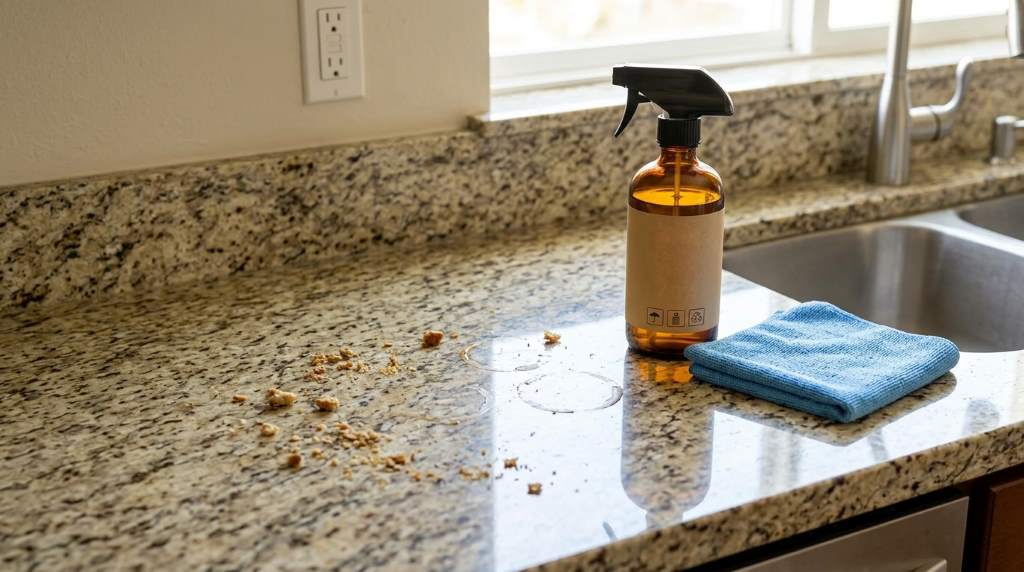
Clean countertops improve both kitchen hygiene and visual appeal. According to studies by the National Sanitation Foundation, kitchen surfaces often contain more bacteria than many household areas. Therefore, using the right cleaning method matters for every household in the USA. When searching for the best kitchen countertop cleaner spray, understanding proper cleaning techniques helps maximize results while protecting countertop materials.
Many homeowners clean countertops daily, yet improper techniques can leave behind bacteria, streaks, and surface damage. Fortunately, using the best cleaner spray correctly can deliver spotless and sanitary surfaces. This guide explains proven methods, material-specific techniques, and expert tips for maintaining beautiful kitchen counters.
Why Proper Countertop Cleaning Matters
Kitchen countertops serve as one of the busiest surfaces in any home. They regularly contact food, cooking utensils, and household items.
As a result, improper cleaning may allow bacteria, grease, and stains to accumulate. Regular maintenance preserves appearance and extends countertop lifespan.
Additionally, clean counters improve indoor hygiene and create a healthier cooking environment. Proper cleaning routines also reduce costly repairs and replacements.
Choosing the Best Cleaner Spray for Your Countertops
Not every cleaner spray works safely on every surface. Different countertop materials require specific formulations.
Before purchasing a cleaner spray, always verify compatibility with your countertop material. Manufacturer recommendations provide the safest guidance.
Features to Look for in a Quality Cleaner Spray
- Non-abrasive ingredients
- Fast-drying formula
- Food-safe certification
- Residue-free cleaning action
- Surface-specific compatibility
- Low odor formulation
- Antibacterial protection when needed
Identify Your Countertop Material First
Different surfaces react differently to cleaning products. Therefore, identification remains the first step before cleaning.
Granite Countertops
Granite requires pH-balanced cleaners that protect the stone sealant. Acidic products can damage the protective coating.
Quartz Countertops
Quartz surfaces tolerate many cleaner sprays but require non-abrasive formulations. Harsh chemicals may dull the finish.
Marble Countertops
Marble remains highly sensitive to acidic substances. Specialized stone cleaners provide the safest cleaning option.
Laminate Countertops
Laminate surfaces respond well to gentle multipurpose cleaner sprays. However, excessive moisture can damage seams.
Solid Surface Countertops
Solid surfaces generally tolerate standard countertop sprays. Nevertheless, avoiding abrasive pads remains essential.
Tools You Need Before Cleaning
Preparing the proper cleaning tools improves efficiency and protects countertop surfaces. Fortunately, most supplies remain inexpensive.
- Microfiber cloths
- Soft cleaning sponge
- Countertop cleaner spray
- Warm water
- Dry polishing cloth
- Paper towels for spills
- Soft-bristle brush for corners
How to Clean Counters Using the Best Cleaner Spray
Step 1: Remove Loose Debris
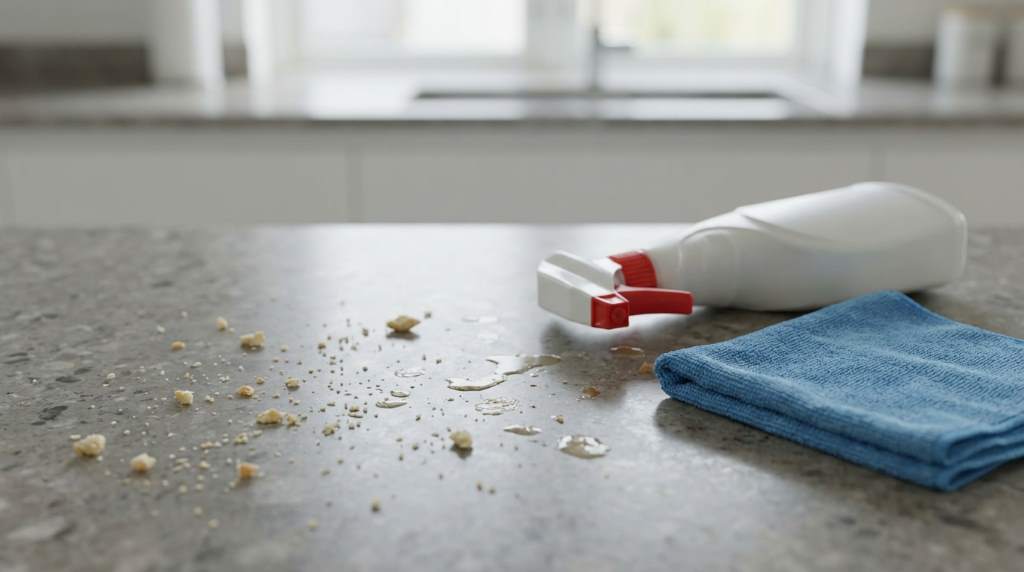
Begin by removing crumbs, dust, and food particles. This step prevents scratching during cleaning.
Use a dry microfiber cloth or soft brush. Additionally, clear all appliances and accessories from the countertop.
Step 2: Apply the Cleaner Spray Evenly
Spray the cleaner directly onto the countertop surface. Apply a light, even coating rather than oversaturating.
Most quality sprays require brief dwell time. Therefore, allow the cleaner to sit according to product instructions.
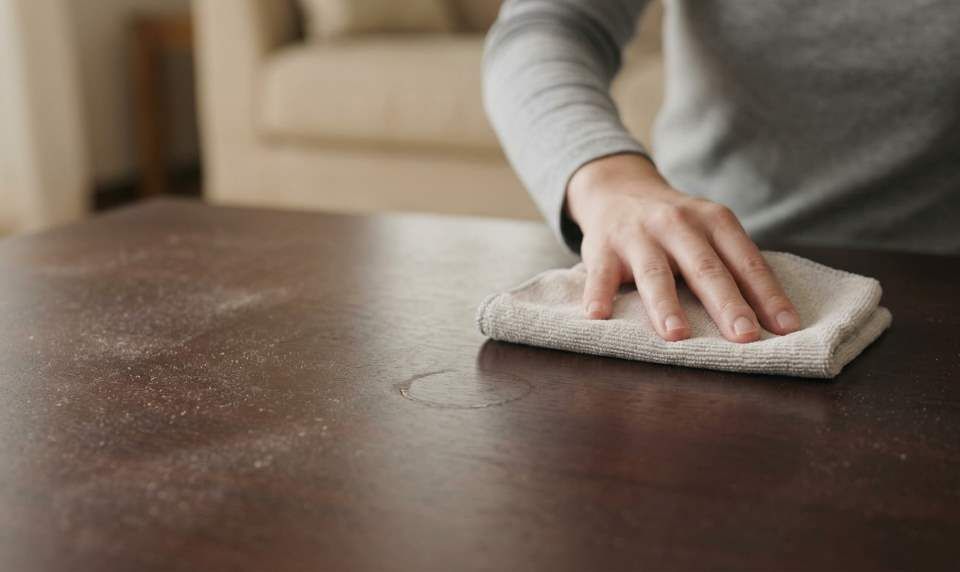
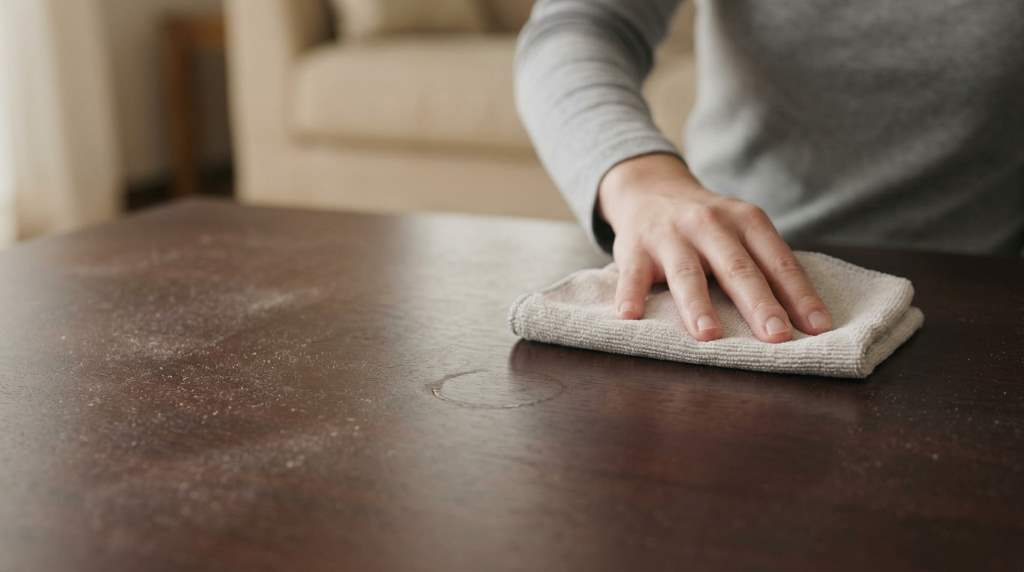
Step 3: Wipe Using Circular Motions
Use a clean microfiber cloth to wipe the surface gently. Circular motions help lift grease and residue effectively.
Continue wiping until all visible dirt disappears. Replace dirty cloths when necessary.
Step 4: Address Stubborn Spots
For dried spills, apply additional cleaner spray directly onto the affected area. Allow several minutes for penetration.
Then gently scrub using a soft sponge or brush. Avoid using metal scrubbers or abrasive pads.
Step 5: Dry and Polish the Surface
After cleaning, use a dry microfiber cloth to remove remaining moisture. This step prevents streaks and water spots.
Polishing also restores the countertop’s natural shine. Consequently, the surface appears professionally cleaned.
Common Countertop Cleaning Mistakes to Avoid
Many homeowners accidentally damage countertops through improper cleaning habits. Fortunately, these mistakes remain preventable.
- Using bleach excessively
- Applying abrasive scrubbers
- Ignoring manufacturer guidelines
- Leaving spills untreated
- Using acidic cleaners on stone
- Over-saturating laminate surfaces
- Skipping regular maintenance
How Often Should You Clean Kitchen Counters?
Daily cleaning removes bacteria and food residue effectively. Therefore, light cleaning should occur after meal preparation.
Deep cleaning should occur weekly for most households. High-use kitchens may require additional sanitizing.
Furthermore, immediate spill cleanup prevents staining and long-term surface damage. Consistency produces the best results.
Natural vs Commercial Countertop Cleaner Sprays
Many homeowners compare natural cleaners with commercial products. Both options offer unique advantages.
Natural Cleaner Benefits
- Fewer synthetic chemicals
- Lower environmental impact
- Gentle cleaning performance
- Reduced strong odors
Commercial Cleaner Benefits
- Stronger grease removal
- Antibacterial formulations
- Surface-specific options
- Faster cleaning performance
The ideal choice depends on countertop material, cleaning frequency, and personal preferences.
Professional Tips for Long Lasting Countertops
Experts recommend using cutting boards consistently. Direct cutting damages many countertop surfaces over time.
Additionally, use trivets under hot cookware whenever possible. Heat exposure may weaken protective finishes.
Sealing natural stone countertops according to manufacturer recommendations also improves durability. Preventive care saves significant costs.
Finally, maintain a regular cleaning schedule using appropriate cleaner sprays. Consistency remains the key to preserving countertop beauty.
Conclusion
Learning how to clean counters using the best cleaner spray helps protect your investment while maintaining a healthier kitchen environment. Selecting the proper cleaner, using correct techniques, and following material-specific guidelines deliver professional-quality results.
Start implementing these cleaning practices today to keep your kitchen countertops spotless, sanitary, and beautiful for years to come.
FAQs
Can I use the same cleaner spray on all countertops?
No, different countertop materials require compatible cleaning formulations.
How often should I disinfect kitchen countertops?
Most kitchen countertops should be disinfected daily after food preparation.
Do cleaner sprays damage granite countertops?
Only improper or acidic cleaners may damage granite surfaces.
Are microfiber cloths better than paper towels?
Yes, microfiber cloths clean more effectively and reduce streaking.
Should countertops be dried after cleaning?
Yes, drying prevents water spots and improves surface appearance.