How to Fix Toshiba EM131A5C-SS Microwave Not Heating

How to Refill and Fix a Sputtering Sondiko Butane Torch
August 11, 2026
Why Is My Black+Decker BCED37 Compact Dryer Not Heating?
August 11, 2026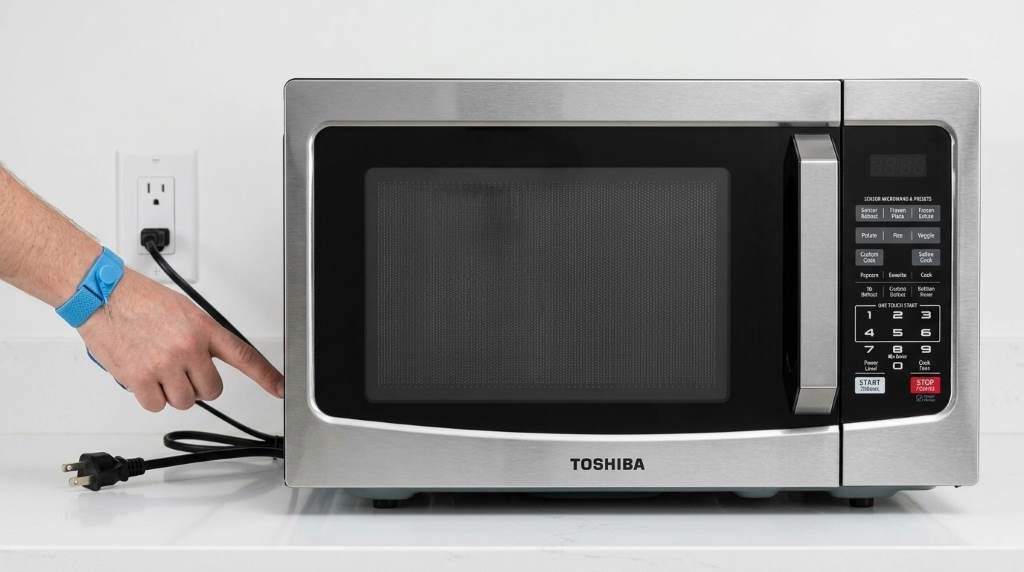
If your Toshiba EM131A5C-SS microwave runs but leaves food cold, start with simple power, setting, door, and airflow checks. The model uses 1,100 watts of microwave output and has 10 selectable power levels, so weak heating needs investigation. A Toshiba EM131A5C-SS countertop microwave should heat normally when its power supply, controls, door system, and heating circuit work correctly.
Fortunately, many apparent heating problems come from incorrect settings or simple operating issues. However, internal microwave components can create dangerous electrical hazards, even after unplugging the appliance.
Start With the Symptoms Before Troubleshooting
First, determine exactly what the microwave does when you press Start. This small step helps separate a heating problem from a power or control problem.
If the display works and the turntable rotates, the microwave receives power. Yet, that does not prove the heating circuit works correctly.
Next, notice whether the oven produces unusual sounds, smells, sparks, or repeated shutdowns. These signs can indicate a component fault that requires professional service.
Common Symptoms and What They Suggest
- Runs but stays cold: Check settings first, then consider a heating circuit problem.
- Does not start: Check the door, controls, outlet, and possible lock function.
- Heats very slowly: Check power level, voltage, load size, and ventilation.
- Stops during cooking: Check overheating, airflow, and repeated heavy use.
- Makes loud buzzing: Stop using it and arrange qualified service.
Check the Microwave Power Supply
Begin with the wall outlet because inconsistent electrical power can affect microwave operation. Plug another suitable appliance into the same outlet to confirm basic power delivery.
Then inspect the Toshiba power cord for visible damage, cuts, scorching, or loose connections. Do not use the microwave if the cord or plug shows damage.
Also check your home’s circuit breaker if the microwave suddenly stopped heating. Resetting a tripped breaker may restore normal operation when the circuit caused the problem.
Avoid Problematic Extension Cord Setups
The EM131A5C-SS manual specifies a grounded electrical connection and provides specific guidance for extension cords. If you use one, its rating must meet or exceed the microwave’s electrical requirements.
For reliable operation, connect the microwave directly to an appropriate grounded household outlet whenever practical. Avoid sharing a heavily loaded circuit with powerful kitchen appliances.
Confirm You Are Actually Using Microwave Cooking
Sometimes the microwave appears operational because the display counts down, yet the selected function does not heat normally. Therefore, test the appliance using a basic Time Cook cycle.
Place a microwave safe cup containing water inside the cavity. Then select Time Cook, set a short heating period, and use the highest power level.
The EM131A5C-SS provides 10 power levels, so accidentally selecting a low setting can make heating seem unusually weak. Check the displayed power level before assuming the appliance has failed.
Use a Simple Water Heating Test
A water test gives you a practical way to compare heating performance without guessing. Use the same cup, water amount, starting temperature, and cooking time during repeat tests.
- Fill a microwave safe cup with water.
- Place the cup near the center of the turntable.
- Select Time Cook at full power.
- Run the microwave for a short, controlled test.
- Carefully check whether the water becomes noticeably hotter.
Do not touch the water immediately if it becomes very hot. Heated liquids can sometimes exceed their visible boiling point and suddenly boil when disturbed.
Inspect the Door and Latches
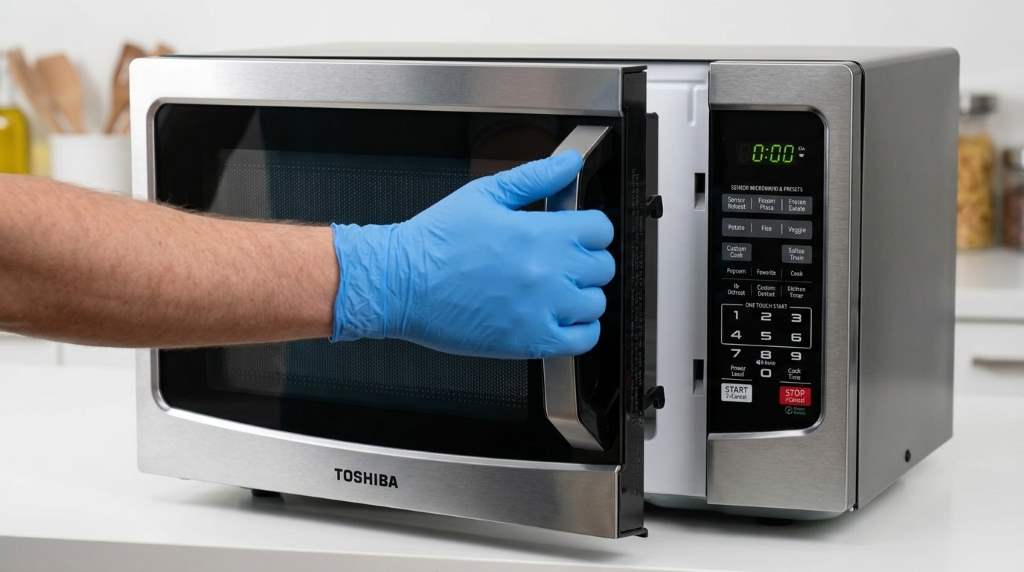
A microwave depends on properly functioning door safety interlocks before it can produce microwave energy. Therefore, a damaged or poorly closing door deserves immediate attention.
Open and close the door normally, then check whether it closes firmly without unusual movement. Look for damaged hinges, broken latches, bent metal, or visible sealing problems.
Clean food residue from the door and sealing surfaces using a soft, damp cloth. The manual specifically warns against operating the oven when the door, hinges, latches, seals, or sealing surfaces have damage.
Never Bypass the Door Safety System
Never tape, hold, disconnect, or modify a microwave door interlock to make the appliance operate. These safety components protect you from exposure to microwave energy.
If the microwave starts behaving strangely when you move or open the door, stop using it immediately. Arrange inspection by qualified service personnel instead of attempting a workaround.
Check the Control Lock and Settings
The EM131A5C-SS includes a lock function that can prevent normal operation. If the controls seem unresponsive, check whether the lock indicator appears on the display.
Follow the model’s control instructions to disable the lock before testing heating again. A locked control panel can look like a mechanical failure when the microwave itself remains functional.
Also verify that you selected Time Cook rather than Kitchen Timer. The kitchen timer counts down without activating the microwave heating system.
Clean the Cavity and Waveguide Area
Food splashes can accumulate inside the microwave and interfere with normal operation. Heavy residue can also contribute to sparking, odors, and uneven cooking.
Clean the cavity with a soft cloth and mild, nonabrasive cleaning solution. Pay particular attention to the interior ceiling, side walls, floor, and door sealing surfaces.
The waveguide area also needs attention when food residue accumulates there. The manual recommends keeping this area clean and removing food splash residue with a soft damp cloth.
Never Scrub the Interior Aggressively
Abrasive cleaners can damage interior surfaces and create additional problems. Instead, soften stubborn food residue before wiping it away gently.
Do not scrape damaged paint or attempt to repair damaged cavity surfaces yourself. Significant interior damage deserves professional evaluation before further operation.
Make Sure the Turntable Works Properly
The turntable does not create microwave energy, but correct installation supports more even cooking. A misplaced tray or ring can also cause unusual operation or noise.
Remove the glass tray and inspect the turntable ring for food debris or obstruction. Clean both pieces before reinstalling them correctly.
The EM131A5C-SS uses a 12.4 inch turntable, and the manual requires the glass tray and turntable ring during cooking.
Check for Obstructions
- Make sure the glass tray sits correctly on its support.
- Confirm the turntable ring moves freely.
- Remove food particles beneath the rotating components.
- Keep oversized containers from blocking rotation.
If the microwave heats but the turntable remains completely stationary, address that issue separately. Heating can still occur, but uneven food temperatures may become more noticeable.
Check Ventilation and Overheating
Microwaves need adequate airflow around their ventilation openings. Blocked openings can increase internal heat and trigger protective shutdown behavior.
Keep the appliance away from other heat producing appliances and avoid covering its ventilation openings. The installation guidance specifically warns against placing the unit over a range or another heat source.
If the microwave stops heating after repeated cooking cycles, allow it to cool completely. Then test it again with a small water heating cycle.
Understand When the Problem Needs Professional Repair
If the Toshiba runs normally but consistently fails the water test, the problem may involve an internal heating component. Common possibilities include the magnetron, high voltage diode, capacitor, transformer, thermal protection, or related circuitry.
These components operate at hazardous voltages and require specialized diagnostic procedures. The EM131A5C-SS manual explicitly states that the appliance should not be disassembled and should receive service from qualified personnel.
Do Not Open the Microwave Cabinet
Unplugging the microwave does not automatically make internal components safe to touch. A high voltage capacitor can retain dangerous electrical energy after power removal.
For that reason, do not remove the outer cabinet, test internal components, discharge capacitors, or replace high voltage parts yourself. Professional microwave technicians have the equipment and procedures needed for safe diagnosis.
When Replacement Makes More Sense
A heating failure does not automatically mean you need another microwave. First, determine whether a qualified technician can diagnose the fault economically.
However, replacement may make more sense when several problems appear together. Consider replacement when the microwave has serious cabinet damage, door damage, repeated electrical faults, or an expensive internal repair.
Also consider the appliance’s overall condition and expected remaining service life. A simple external issue deserves troubleshooting, while major internal failure requires a practical repair versus replacement decision.
A Practical Toshiba Heating Troubleshooting Checklist
Work through these checks in order instead of randomly testing different functions. This approach reduces unnecessary repairs and helps identify the problem faster.
- Confirm the wall outlet provides power.
- Inspect the power cord and plug.
- Check the circuit breaker.
- Confirm the door closes correctly.
- Check the control lock.
- Use Time Cook instead of Kitchen Timer.
- Select the highest power level.
- Run a controlled water heating test.
- Clean the cavity and waveguide area.
- Check the turntable and roller ring.
- Allow the microwave to cool after heavy use.
- Stop using the appliance when unusual noises or damage appear.
Common Mistakes That Can Cause Weak Heating
Users sometimes blame the microwave when the selected cooking method creates the problem. Fortunately, several mistakes take only seconds to correct.
- Running Kitchen Timer instead of Time Cook.
- Accidentally selecting a low power level.
- Using a damaged or poorly closing door.
- Blocking ventilation openings.
- Using unsuitable containers that restrict normal cooking.
- Ignoring heavy food residue inside the cavity.
- Continuing operation after sparks, burning smells, or unusual noises.
Correcting these issues can restore normal performance without opening the appliance. If heating remains absent, stop troubleshooting once internal repair becomes likely.
How to Prevent Future Heating Problems
Good operating habits can reduce unnecessary stress on the microwave and keep cooking performance consistent. Clean spills promptly instead of allowing residue to build up around the cavity.
Use microwave safe cookware and avoid sealed containers unless you follow appropriate preparation instructions. Also, never operate the oven empty unless the manufacturer specifically instructs you to do so.
Keep the door, hinges, and latch clean and free from impacts. Finally, give the appliance adequate ventilation and avoid repeated heavy cooking when it becomes unusually hot.
Frequently Asked Questions
Why does my Toshiba EM131A5C-SS run but not heat?
A faulty setting, door interlock, thermal protection system, or internal heating component can cause this symptom.
How can I test whether my Toshiba microwave heats?
Run a controlled Time Cook test using a microwave safe cup of water at full power.
Can a dirty microwave stop heating?
Heavy food residue can cause arcing and operating problems, so clean the cavity and waveguide area carefully.
Should I replace the magnetron myself?
No, microwave magnetron replacement requires professional service because the internal high voltage system can remain dangerous.
Why does my Toshiba microwave heat slowly?
Check the power level, electrical supply, ventilation, food load, and possible internal heating faults.
Final Takeaway
Fixing a Toshiba EM131A5C-SS that does not heat starts with safe external checks rather than cabinet disassembly. Confirm power, cooking mode, power level, door condition, ventilation, cleanliness, and turntable installation.
If those checks fail to restore heating, stop using the appliance and arrange qualified service. That approach protects you from high voltage hazards while giving the technician useful information about the failure.
Before paying for a major repair, compare the technician’s diagnosis with the microwave’s overall condition. A clear diagnosis lets you make a practical decision between repair and replacement.