How to Fix a Euhomy Countertop Ice Maker Not Making Ice

Why Is My CreoleFeast TFS3010 Turkey Fryer Flame Yellow?
August 11, 2026
Why Is My Everydrop EDR1RXD1 Water Filter Leaking?
August 12, 2026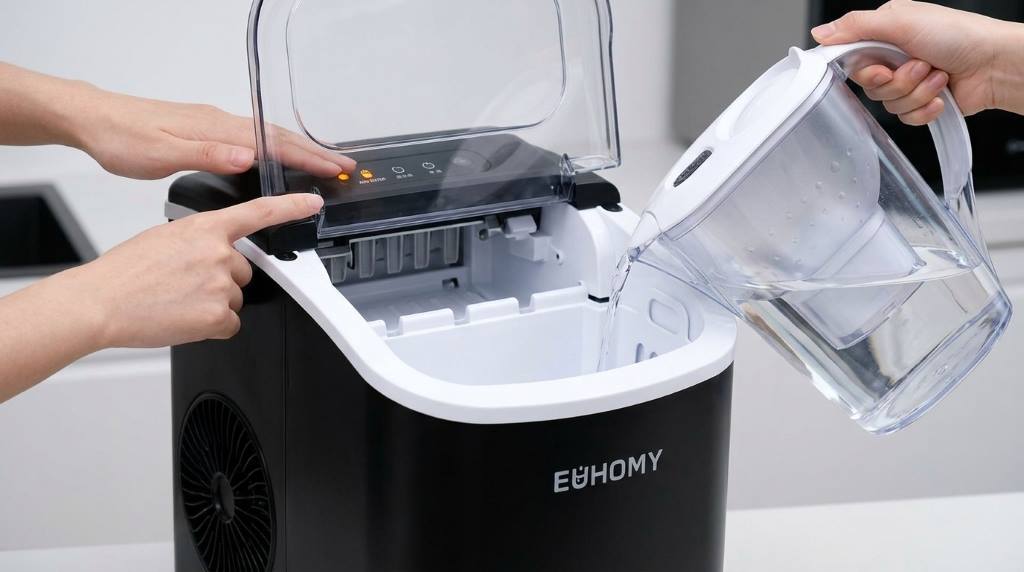
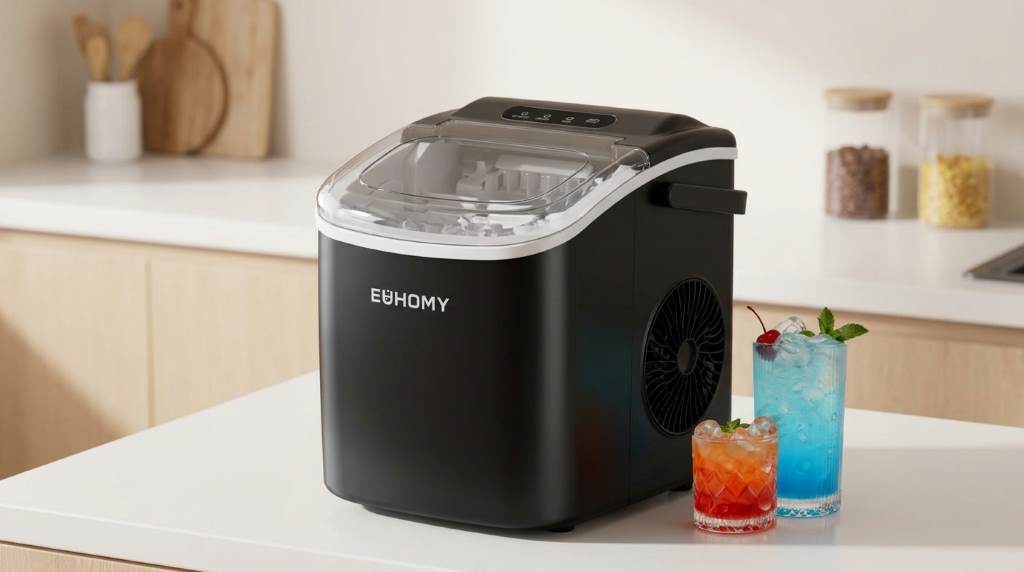
A Euhomy countertop ice maker usually stops making ice because of water flow, temperature, buildup, or sensor issues. Start by checking water, airflow, cleaning, and power before considering an internal repair.
Countertop ice makers can begin acting strangely after routine use, especially with hard water or poor ventilation. Euhomy recommends operating its ice makers below 90°F and using room temperature water.
If you use an Euhomy countertop ice maker machine, simple checks can often restore normal production. This guide explains what to inspect, what each symptom means, and when professional help makes sense.
Start With the Four Checks That Matter Most
Before taking anything apart, check the machine’s basic operating conditions. These checks quickly separate simple problems from possible mechanical or cooling faults.
- Confirm the machine has power and the ice making function remains active.
- Check the reservoir and confirm enough water reaches the intake area.
- Inspect the ice basket and sensor area for misplaced or stuck ice.
- Make sure surrounding vents have enough space for proper airflow.
After each adjustment, allow the machine to complete another cycle. This approach prevents unnecessary resets, cleaning, and part replacements.
Check Whether the Machine Receives Enough Water
Water delivery remains one of the first things to inspect when ice production stops. A machine can power on normally while receiving too little water for freezing.
First, remove the reservoir if your model uses a removable tank. Then check its water level, seating position, and intake area for visible debris.
Also inspect any water line for bends, pinches, or restrictions. A restricted water path can produce weak flow and smaller ice before production stops completely.
What Different Water Symptoms Mean
| Symptom | Likely Cause | First Action |
|---|---|---|
| No water enters the freezing area | Empty reservoir or blocked intake | Check water level and intake |
| Water enters slowly | Restriction or mineral buildup | Inspect and clean the water path |
| Normal water enters but no ice forms | Cooling or temperature issue | Check ventilation and placement |
| Add Water light stays active | Detection or seating problem | Reseat the reservoir and restart |
Euhomy notes that an Add Water warning can remain active when the machine fails to detect available water properly. Reservoir seating and intake conditions therefore deserve attention.
Make Sure the Ice Maker Can Get Cold Enough
Ice cannot form properly when the machine cannot remove enough heat. Therefore, inspect the environment before assuming the refrigeration system failed.
Move the ice maker away from ovens, direct sunlight, and other heat producing appliances. Also leave adequate clearance around ventilation openings so warm air can escape.
Do not place the unit inside a cramped cabinet during operation. Restricted airflow can increase internal heat and extend freezing cycles.
Euhomy advises operating its ice makers below 90°F for better production. It also recommends room temperature water for normal ice making.
Signs That Point Toward a Cooling Problem
- The machine runs for a long time without producing ice.
- Water enters normally but never develops a solid frozen layer.
- The compressor or fan sounds active without normal ice production.
- Several cycles produce no meaningful improvement after cleaning.
If these symptoms continue after proper placement, stop changing settings repeatedly. A refrigeration problem may require qualified service rather than another household troubleshooting step.
Clean Mineral Buildup Before Replacing Anything
Mineral deposits can interfere with water movement, pumping, and heat transfer. Consequently, regular cleaning should become part of your troubleshooting routine.
Hard water can leave scale around internal water passages and freezing surfaces. Over time, that buildup can reduce performance and create unusual noises.
Start with the cleaning procedure specified for your exact Euhomy model. Avoid forcing tools into narrow passages or scraping sensitive components.
Euhomy currently recommends daily cleaning cycles for supported models and a deeper monthly cleaning routine. It also recommends replacing reservoir water every 24 hours.
Basic Cleaning Sequence
- Turn the machine off and disconnect power when the manual requires it.
- Empty the remaining water and remove accessible ice.
- Clean the reservoir and accessible surfaces using the approved method.
- Run the machine’s cleaning cycle when your model provides that function.
- Drain the cleaning solution completely after the cycle finishes.
- Rinse thoroughly with clean water before making fresh ice.
- Run another cycle and check whether ice production improves.
Never assume every Euhomy model uses the same cleaning controls. Always follow the instructions for your specific model before adding cleaner.
Inspect the Ice Full Sensor
A sensor can stop ice production when it incorrectly detects a full basket. This issue can appear confusing because the basket may look almost empty.
First, remove loose ice around the sensor area without forcing any components. Then check whether the basket sits correctly inside the machine.
Some Euhomy models use an ice full sensor that automatically stops production when the basket fills. A blocked sensor can therefore interrupt normal production.
Try a Simple Sensor Test
Turn the machine off before inspecting movable parts or reaching inside. Remove anything visibly blocking the sensor and reinstall the basket correctly.
Then restart the machine and observe the indicator lights. If the Ice Full warning returns with an empty basket, the sensor deserves closer attention.
Euhomy specifically suggests moving certain models to a darker location when the Ice Full light remains active incorrectly.
Reset the Euhomy Ice Maker Correctly
A reset can clear temporary control errors, but it cannot repair damaged hardware. Therefore, reset only after checking water, temperature, sensors, and visible buildup.
Begin by turning the machine off and disconnecting its power. Allow the unit to remain disconnected for the period specified by your model instructions.
Some Euhomy support guidance recommends unplugging certain models for two hours before restarting them. This procedure can help clear persistent indicator problems.
After reconnecting power, refill the reservoir with appropriate water. Then select the normal ice making function and monitor the first complete cycle.
Check Whether Ice Forms but Fails to Drop
Not every no ice problem means the machine cannot freeze water. Sometimes ice forms correctly but fails during the harvesting stage.
Look for frozen material attached to the freezing surface or partially formed pieces. Those signs suggest the machine may have reached the freezing stage successfully.
Also check for excessive ice thickness or pieces that remain stuck. Certain Euhomy models allow ice making time adjustments that affect thickness.
What To Do With Stuck Ice
- Turn the machine off before touching the internal ice making area.
- Allow stuck ice to soften naturally instead of forcing it loose.
- Never use a sharp metal object against the freezing surface.
- Clean mineral residue if buildup appears around the affected area.
- Restart the unit after the area becomes clear.
If the machine repeatedly freezes ice but cannot release it, stop forcing the cycle. Repeated harvest failures can indicate a mechanical or control problem.
Use the Symptoms to Find the Real Cause
The fastest troubleshooting method matches the visible symptom with the correct system. This method saves time because each symptom points toward a different inspection path.
| Observed Problem | Most Useful Check | Next Step |
|---|---|---|
| Machine has power but makes no ice | Water and temperature | Check reservoir and ventilation |
| Add Water warning appears | Reservoir seating and intake | Reseat, clean, and restart |
| Ice Full warning appears incorrectly | Sensor area | Clear obstruction and retest |
| Ice looks very small | Water flow and buildup | Clean and inspect water delivery |
| Ice forms but stays attached | Harvest mechanism | Allow release and inspect safely |
| Machine runs without freezing | Cooling performance | Improve airflow and seek service if needed |
Do Not Ignore Small or Hollow Ice
Small ice often provides an earlier warning than complete ice production failure. Water flow, mineral buildup, temperature, and operating conditions can all affect cube size.
First, verify that the reservoir contains clean water and the intake remains unobstructed. Next, check airflow and clean the machine if scale appears.
Euhomy identifies water flow, temperature, and buildup as common areas to investigate when ice becomes smaller.
If the ice remains unusually small after those checks, record the pattern before contacting support. Clear observations can make technical diagnosis much faster.
Know When DIY Troubleshooting Should Stop
Some problems require more than cleaning, resetting, or repositioning. Knowing when to stop protects both the appliance and the person troubleshooting it.
- The machine repeatedly runs without becoming cold enough to freeze water.
- The same warning returns immediately after cleaning and restarting.
- You notice damaged wiring, burning smells, or unusual electrical behavior.
- Water reaches the machine but production never resumes after basic checks.
- The unit shows repeated mechanical failures during harvesting.
Euhomy states that a machine running without making ice can indicate a refrigeration issue when basic conditions remain normal.
At that point, contact Euhomy support or a qualified appliance technician. Avoid opening sealed refrigeration components because improper service can create additional safety and performance problems.
Prevent the Problem From Returning
Once your Euhomy ice maker works again, prevention becomes much easier than repeated troubleshooting. A small maintenance routine can reduce several common causes of poor production.
- Replace reservoir water regularly instead of letting old water sit.
- Clean the machine according to your model’s recommended schedule.
- Keep ventilation openings clear during every operating cycle.
- Use suitable drinking water that matches the manufacturer’s recommendations.
- Keep the ice basket and sensor area free from buildup and obstructions.
- Store the machine properly when you will not use it for extended periods.
Regular cleaning matters because mineral residue can restrict internal water movement. Euhomy specifically connects scale buildup with pump blockage and malfunction.
A Practical Five Minute Diagnostic Routine
When the machine suddenly stops producing ice, use a consistent sequence instead of guessing. This simple routine helps identify the problem without unnecessary part replacement.
- Check power and confirm the machine remains in ice making mode.
- Check water level, reservoir seating, and visible intake restrictions.
- Inspect the ice basket and sensor area for obstructions.
- Check ventilation and move the unit away from heat sources.
- Clean visible buildup and perform the approved cleaning cycle.
- Reset the machine according to the model instructions.
- Monitor the next cycle before making additional changes.
If production returns, monitor the machine during several additional cycles. If production remains absent, document the symptoms and contact qualified support.
Final Takeaway
A Euhomy countertop ice maker that stops making ice usually needs systematic troubleshooting rather than immediate replacement. Start with water, airflow, sensors, cleaning, and resetting before investigating deeper mechanical faults.
Most importantly, match the symptom with the correct system before changing anything. Follow your exact model instructions, avoid forcing internal components, and seek professional support when cooling problems persist.
Use this troubleshooting sequence the next time your Euhomy machine stops producing ice. If basic checks fail, contact Euhomy support with your model number and a clear description of the symptoms.
Frequently Asked Questions
Why is my Euhomy ice maker running but not making ice?
Check water flow, ambient temperature, ventilation, buildup, and cooling performance before considering service.
Why does my Euhomy ice maker say Add Water when full?
The reservoir may sit incorrectly, or the machine may fail to detect water reaching its intake.
How long should I unplug my Euhomy ice maker for a reset?
Some Euhomy models recommend a two hour power disconnect, but always follow your model’s instructions.
Can dirty water stop a Euhomy ice maker from making ice?
Yes, mineral buildup can restrict water movement and interfere with normal ice production.
When should I call a technician for my Euhomy ice maker?
Seek qualified service when cooling failures, electrical faults, or repeated mechanical problems remain after basic troubleshooting.