How to Fix Cosori 9-in-1 TurboBlaze Air Fryer Fan Noise

Why Is My Comfee Portable Mini Dishwasher Leaking?
August 11, 2026
How to Control Temp on Creole Feast SBK1001 Seafood Boiler
August 11, 2026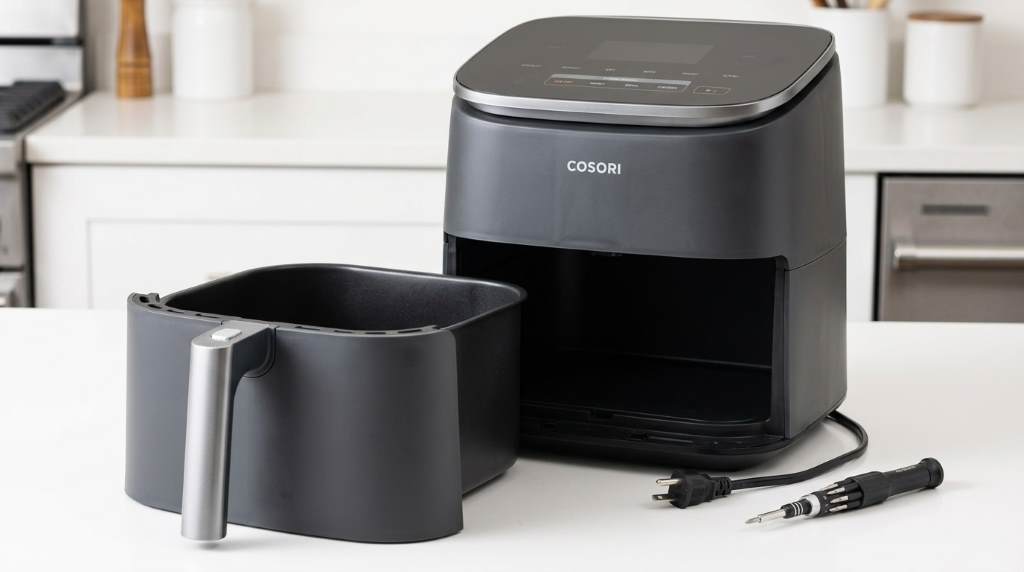
If your Cosori 9-in-1 TurboBlaze air fryer suddenly makes loud fan noise, first unplug it and let it cool completely. Then clean the airflow area, check the basket and crisper plate, and confirm the fryer sits level. The Cosori 9-in-1 TurboBlaze air fryer uses five fan speeds and operates across nine cooking functions. Its listed noise range reaches about 53 decibels, so some fan sound remains normal during cooking.
What Causes Cosori TurboBlaze Fan Noise?
The TurboBlaze relies on a DC motor and high speed airflow to move heated air around the cooking chamber. Therefore, a steady humming sound usually indicates normal fan operation rather than a defect. However, sudden rattling, scraping, buzzing, clicking, or grinding deserves closer inspection.
Several simple problems can make normal airflow sound much louder than expected. Food debris, grease buildup, poor placement, loose components, or restricted ventilation can change the sound noticeably.
- Food debris near the airflow path
- Grease buildup around internal surfaces
- A basket or crisper plate that sits incorrectly
- An unstable or uneven countertop
- Blocked ventilation around the appliance
- A damaged or obstructed fan
- An internal motor or electrical problem
First, Identify What the Noise Sounds Like
Before cleaning anything, listen carefully to the sound during a normal cooking cycle. The type of noise often provides the first useful clue about the underlying problem.
| Noise type | Likely cause | Recommended action |
|---|---|---|
| Steady hum | Normal fan operation | Continue normal use if performance remains normal |
| Rattle | Loose or poorly seated component | Check the basket and crisper plate |
| Buzzing | Vibration or airflow obstruction | Inspect placement and ventilation |
| Scraping | Possible fan obstruction | Stop using the appliance and inspect safely |
| Grinding | Possible motor or fan problem | Stop operation and contact support |
| Sudden loud vibration | Debris, placement, or component issue | Unplug and perform the basic checks |
How to Fix Fan Noise Step by Step
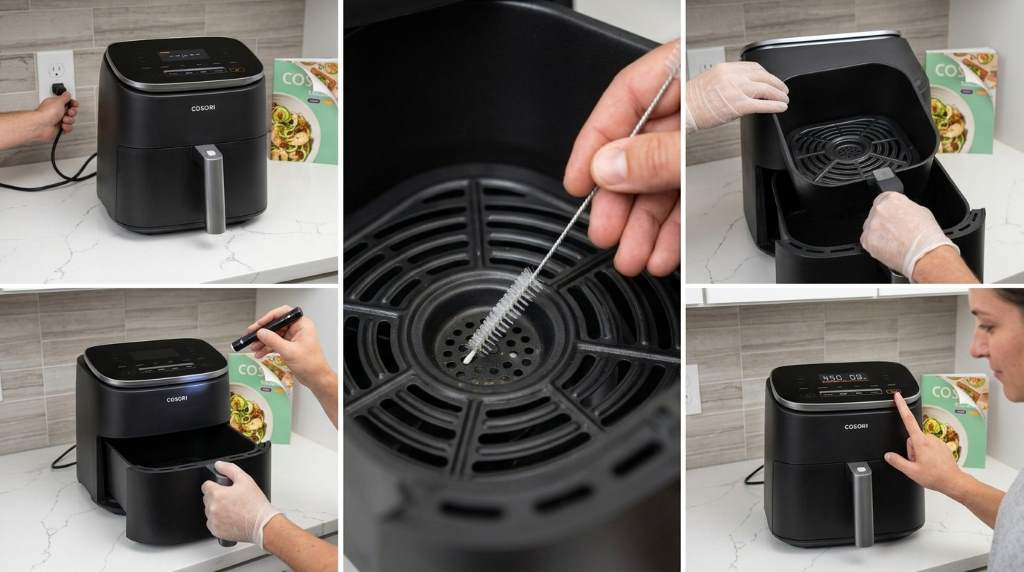
1. Turn Off and Unplug the Air Fryer
Start with safety before troubleshooting the noise source. Turn the appliance off, unplug it from the outlet, and allow every hot surface to cool.
Never inspect internal electrical components while the appliance remains connected to power. Also, avoid opening the upper housing because the manufacturer does not intend that area for user access.
2. Remove and Clean the Basket
Pull out the basket and remove the crisper plate after the appliance cools completely. Food particles and grease can create vibration or interfere with normal airflow.
Wash both removable parts with hot soapy water and a nonabrasive sponge. You can also use the dishwasher because the basket and crisper plate support dishwasher cleaning.
For stubborn grease, apply a baking soda paste and let it sit before rinsing thoroughly. Then dry every removable component completely before reinstalling it.
3. Check the Crisper Plate
A poorly seated crisper plate can create movement that sounds like fan trouble. Therefore, inspect the four silicone stoppers and confirm the plate sits securely inside the basket.
Insert one side first, then press the opposite side downward until the plate sits correctly. Do not force the plate into position because incorrect installation can damage the component.
4. Inspect the Cooking Chamber
Use a flashlight to examine the inside after unplugging and cooling the appliance. Look for crumbs, grease, food particles, or other debris around the heating area.
Clean accessible surfaces with a slightly damp, nonabrasive cloth or sponge. Never immerse the main appliance in water or pour liquid into its housing.
5. Clean Around the Heating Element
Food debris near the heating element can contribute to unusual smells, smoke, and abnormal sounds. Carefully inspect the accessible heating area without touching electrical components.
Use a slightly damp, nonabrasive sponge or cloth to remove visible residue. Afterward, allow the heating area to dry completely before reconnecting the appliance.
6. Check the Airflow Around the Unit
The TurboBlaze needs clear airflow around its ventilation openings during operation. If cabinets, walls, or objects restrict those openings, the appliance can experience poor airflow and increased operating noise.
Place the fryer on a flat, stable, heat resistant countertop. Keep approximately five inches of clearance behind and above the unit for proper ventilation.
7. Move It Away From Hard Surfaces
A countertop can amplify vibration even when the appliance itself works correctly. Glass, thin metal, or hollow surfaces can make ordinary fan movement sound unusually loud.
Move the air fryer to a sturdy, level countertop and test it again. Avoid placing it on an unstable surface because vibration can increase during high speed fan operation.
8. Check the Basket Fit
A basket that does not sit securely can create rattling during cooking. Remove it, inspect the surrounding edges, and reinstall it firmly without forcing the drawer.
Also check whether excessive food prevents the basket from seating correctly. A properly inserted basket should remain stable while the fan operates.
9. Test Different Cooking Functions
The TurboBlaze uses different fan speeds depending on the selected cooking function. Turbo modes such as Air Fry, Roast, Broil, and Frozen use the highest fan speed.
Consequently, those settings naturally produce stronger airflow and more noticeable fan sound. Test a lower speed function, such as Dehydrate, and compare the sound.
If the noise appears only at the highest fan speed, strong airflow may explain the difference. However, scraping or grinding sounds still require attention even at normal operating speeds.
When Fan Noise Is Normal
Not every fan sound indicates a malfunction. The TurboBlaze uses a DC motor with five fan speeds, so airflow intensity changes between cooking programs.
A smooth, consistent hum usually represents normal operation. The sound should remain relatively stable without sudden grinding, scraping, harsh rattling, or repeated clicking.
You may also hear the fan change speed during cooking. That change can occur because different programs use different airflow settings for their cooking requirements.
When Fan Noise Indicates a Problem
A sudden change from normal humming to mechanical noise deserves more attention. In particular, grinding or scraping can indicate an obstruction or mechanical issue involving the fan assembly.
Stop using the fryer if the noise becomes severe or accompanies smoke, burning smells, overheating, or abnormal electrical behavior. Continuing operation could worsen an internal fault.
- Grinding or scraping continues after cleaning
- The fan vibrates strongly during operation
- The appliance produces dark smoke
- A burning electrical smell appears
- The unit repeatedly overheats
- An error code appears on the display
- The appliance stops heating or circulating air properly
What Not to Do When Fixing Fan Noise
Some DIY approaches can create more problems than they solve. Avoid opening the housing, spraying lubricant into the fan area, or inserting tools through ventilation openings.
Do not remove electrical components simply to locate the noise. Instead, limit your troubleshooting to accessible parts, cleaning, placement, ventilation, and basket installation.
Also, avoid using third party replacement components without confirming compatibility. Electrical appliances require correctly rated parts and proper installation for safe operation.
How to Prevent TurboBlaze Fan Noise
Regular cleaning provides the simplest way to reduce avoidable airflow problems. Clean the basket and crisper plate after every use, especially after cooking greasy foods.
Additionally, wipe accessible interior surfaces when residue becomes visible. Keep ventilation openings clear and never place objects on top of the air fryer.
- Clean removable parts after every use
- Remove grease before buildup becomes heavy
- Keep ventilation openings unobstructed
- Use a flat and stable countertop
- Seat the crisper plate correctly
- Keep the basket free from excessive food
- Allow the unit to cool before cleaning
- Inspect unusual sounds early
What to Do If Cleaning Does Not Fix the Noise
If the fan remains unusually loud after these checks, stop repeated testing. A persistent mechanical sound can indicate a fan, motor, control, or internal component problem.
At that stage, contact the manufacturer’s customer support rather than attempting an internal repair. Describe the noise clearly and provide the model number, purchase information, and circumstances when the noise occurs.
For example, explain whether the noise happens during every function or only during high speed modes. Also mention whether cleaning, repositioning, and reseating the basket changed the sound.
A Simple Five Minute Fan Noise Check
You can quickly narrow down the problem without dismantling the appliance. Follow this sequence whenever the fan suddenly sounds louder than usual.
- Turn off and unplug the air fryer.
- Wait until the appliance cools completely.
- Remove and clean the basket and crisper plate.
- Inspect accessible interior surfaces for debris.
- Confirm the crisper plate sits correctly.
- Place the fryer on a stable countertop.
- Clear the ventilation space around the appliance.
- Run a brief test using a normal cooking function.
- Compare the sound with its previous normal operation.
If the sound returns to a smooth hum, debris, placement, or component seating likely caused the problem. If the harsh noise continues, discontinue use and seek professional assistance.
Final Takeaway
Fixing Cosori TurboBlaze fan noise usually starts with cleaning, checking component placement, and improving ventilation. A smooth fan hum remains normal, especially when the fryer uses higher fan speeds.
However, grinding, scraping, severe rattling, dark smoke, or burning smells require immediate attention. Complete the safe checks first, then contact customer support if the abnormal noise continues.
Take a few minutes to inspect your fryer before the next cooking session. Early cleaning and careful maintenance can prevent minor airflow problems from becoming larger equipment issues.
FAQs About Cosori TurboBlaze Fan Noise
Is the Cosori TurboBlaze supposed to make fan noise?
Yes, the TurboBlaze naturally makes fan noise because its DC motor circulates hot air during cooking.
Why is my Cosori TurboBlaze suddenly louder?
Sudden loudness can result from debris, vibration, poor placement, component movement, or a developing fan problem.
Can I clean the TurboBlaze fan myself?
You should clean only accessible surfaces and ventilation areas without opening the appliance housing.
Why does my TurboBlaze sound louder on Air Fry?
Air Fry uses the highest fan speed, so stronger airflow naturally creates more noticeable operating noise.
When should I stop using my TurboBlaze?
Stop using it when grinding, scraping, dark smoke, burning smells, overheating, or other abnormal electrical symptoms appear.