Why Is My Black+Decker BCED37 Compact Dryer Not Heating?

How to Fix Toshiba EM131A5C-SS Microwave Not Heating
August 11, 2026
How to Clean a Clogged Breetee Portable Range Hood Filter
August 11, 2026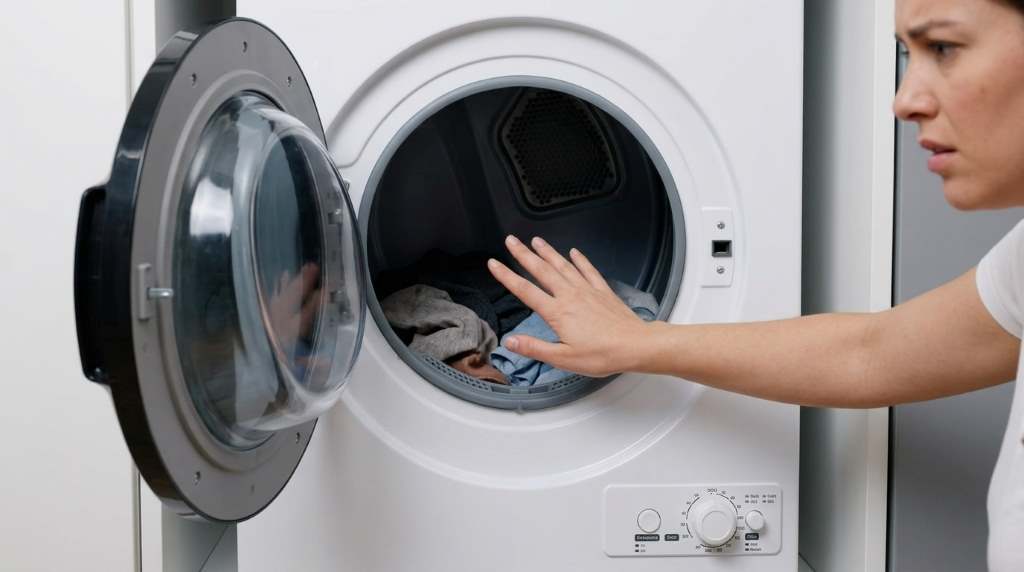
If your Black+Decker BCED37 compact dryer is not heating, first check the heat setting, airflow, lint filters, and load size. If those checks fail, a failed thermal safety component, heating element, thermostat, or electrical part may need service.
The 3.5 cubic foot BCED37 handles loads up to 13.2 pounds and uses a 1,500 watt, 120V electrical system. The Black+Decker BCED37 compact dryer also includes hot, warm, cool, and air dry settings.
Therefore, a no heat problem does not always mean the heating element failed. Start with simple operating checks before opening the cabinet or replacing internal parts.
What Causes a BCED37 Dryer to Stop Heating?
Several conditions can prevent your BCED37 from producing useful heat. Some involve settings or airflow, while others involve internal electrical components.
- Incorrect drying mode or temperature setting
- Clogged lint or exhaust filters
- Restricted or crushed exhaust hose
- Overloaded or tightly packed laundry
- Insufficient airflow around the dryer
- Overheating that activates safety protection
- Failed heating element
- Defective thermostat or thermal fuse
- Damaged wiring or another electrical fault
Importantly, the BCED37 includes overheat protection and a double layer lint filter. Consequently, restricted airflow deserves attention whenever heating suddenly becomes weak.
1. Check the Drying Mode First
The BCED37 provides several operating modes, and not every mode produces high heat. Air Dry intentionally operates without heat, so clothes remain cool during that setting.
Likewise, Cool uses less heat than Warm or Hot. Therefore, move the mode control to Hot when testing whether the dryer can produce normal heat.
Quick Setting Test
- Remove most clothing from the drum.
- Set the mode control to Hot.
- Set the timer for a suitable drying period.
- Close the door firmly.
- Allow the dryer several minutes to operate.
- Check whether the exhaust air becomes noticeably warm.
If Hot produces warm air, the heating system probably works normally. In that situation, the problem may involve the selected mode, load size, moisture level, or airflow.
2. Clean Both Filters Before Testing Again
Lint buildup can restrict airflow and reduce drying performance even when the heating system still works. The manufacturer recommends cleaning the lint filter before or after every load.
However, do not inspect only the primary lint filter. The BCED37 also uses an exhaust filter, which can collect fine lint and dust over time.
How to Clean the Filters
- Turn the dryer off completely.
- Disconnect the power before cleaning internal areas.
- Remove the lint filter carefully.
- Clear visible lint and debris.
- Inspect the exhaust filter for accumulated material.
- Clean the exhaust filter according to the manual.
- Reinstall every filter securely.
Never operate the dryer with a missing or incorrectly installed filter. After cleaning, run a small test load using the Hot setting.
3. Inspect the Exhaust Hose for Restrictions
The BCED37 requires external venting, so airflow directly affects drying performance. A blocked, sharply bent, or crushed hose can trap hot air inside the appliance.
When hot air cannot escape efficiently, the dryer can overheat and activate its safety protection. As a result, the machine may appear to stop heating even though the heating system itself remains functional.
Look for These Vent Problems
- A hose pressed tightly against a wall
- Sharp bends near the exhaust connection
- Lint buildup inside the hose
- Objects blocking the exterior exhaust opening
- Excessively long or complicated routing
- A damaged or collapsed vent hose
Straighten the hose and remove accessible obstructions before testing the dryer again. Keep the exhaust route as short and direct as practical for better airflow.
4. Reduce the Laundry Load
Compact dryers need enough open space for warm air to circulate through clothing. A tightly packed drum can make the dryer seem weak even when everything works correctly.
The BCED37 supports loads up to 13.2 pounds, but maximum capacity does not guarantee ideal drying for every fabric. Heavy towels and dense garments require more airflow and drying time.
Instead, test the dryer with a small load containing several lightweight garments. If that load heats and dries normally, excessive loading likely contributed to the problem.
5. Check Whether the Dryer Recently Overheated
The BCED37 includes overheat protection to help protect the appliance during excessive heat conditions. Restricted airflow, heavy loads, and prolonged operation can contribute to excessive internal temperatures.
If the dryer recently became unusually hot, turn it off and disconnect the power. Allow the appliance to cool completely before checking filters, vents, and surrounding clearance.
Afterward, correct the airflow problem before running another heated cycle. Repeated overheating requires further investigation instead of repeated resets.
6. Make Sure the Dryer Has Proper Ventilation
Proper ventilation around the appliance helps support normal operation and heat management. Avoid placing the dryer tightly against walls, furniture, or other objects.
Also inspect the area around the exhaust connection for restrictions. A compact appliance still needs adequate space for air movement during heated cycles.
If the dryer works temporarily after cooling, ventilation or airflow deserves particular attention. That pattern can indicate a heat related safety response rather than immediate heating element failure.
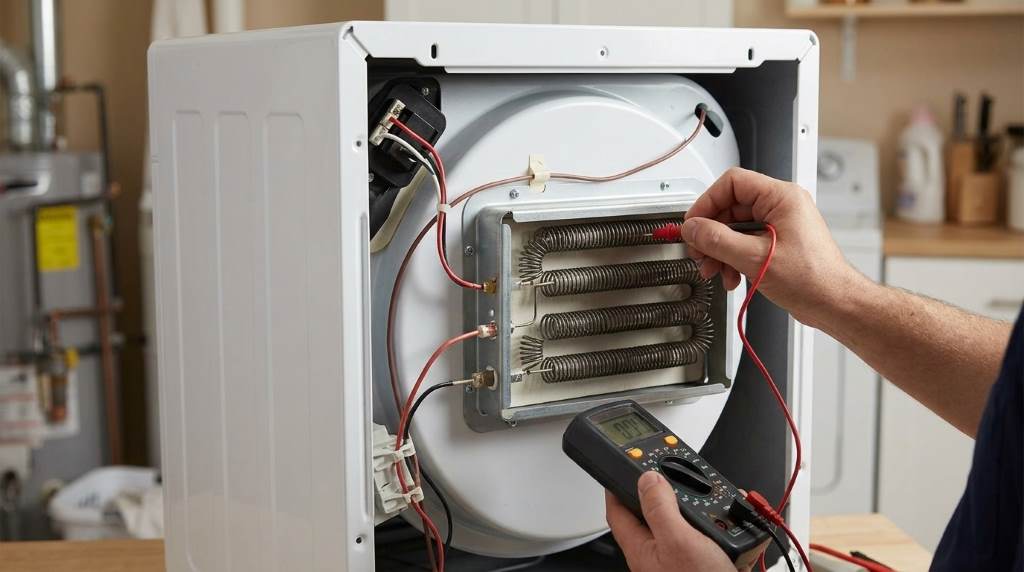
7. Test for a Heating Element Problem
If the dryer runs normally but produces completely cold air, an internal heating component may have failed. The heating element converts electrical energy into the heat required for drying.
A damaged element can develop an open circuit and stop producing heat. However, you should not assume the element failed until basic airflow and setting checks pass.
Signs That Point Toward the Heating Element
- The drum rotates normally.
- The selected setting requires heat.
- Filters remain clean.
- The exhaust path remains clear.
- The dryer still produces no warm air.
- The problem appeared suddenly during normal use.
Internal electrical testing requires appropriate tools and technical knowledge. Disconnect the appliance before any service work, and avoid energized testing unless you understand electrical safety procedures.
8. Consider a Thermal Fuse or Thermostat Fault
Thermal safety components protect dryers from dangerous temperature conditions. A failed thermal fuse or thermostat can interrupt heating even when the dryer motor still operates.
These components can fail after overheating or electrical faults. Importantly, replacing a fuse without correcting the original overheating cause may lead to another failure.
If airflow remains restricted, a replacement fuse may fail again. Therefore, technicians should inspect the surrounding system before replacing safety components.
9. Check the Power Supply Safely
The BCED37 operates from a standard 120V electrical supply. Confirm that the power cord sits securely in the outlet.
Also check your home’s circuit breaker if the dryer suddenly stopped working correctly. Do not repeatedly reset a breaker that trips during dryer operation.
A repeatedly tripping breaker can indicate an electrical problem requiring qualified inspection. Avoid using extension cords or improvised power connections with the appliance.
10. Understand What Sensor Dry Can Change
The BCED37 includes Sensor Dry, which measures moisture and adjusts drying operation automatically. This feature can make a cycle behave differently from a fixed timed drying cycle.
For troubleshooting, use a straightforward timed heated cycle first. This approach removes automatic moisture sensing from the initial diagnosis.
If timed drying produces heat but Sensor Dry behaves unexpectedly, investigate the sensor function separately. That result points away from a completely failed heating system.
A Simple BCED37 No Heat Troubleshooting Sequence
Follow this sequence before considering internal repairs. It helps separate operating problems from genuine component failures.
| Check | What to Do | What the Result Means |
|---|---|---|
| Mode | Set the dryer to Hot | Confirms the selected cycle requests heat |
| Load | Test a small load | Rules out excessive loading |
| Lint filter | Clean the filter | Restores basic airflow |
| Exhaust filter | Remove accumulated lint | Improves exhaust airflow |
| Vent hose | Inspect bends and blockages | Reduces heat buildup |
| Cooling | Let the dryer cool | Helps identify overheating symptoms |
| Power | Check the outlet and breaker | Rules out basic supply problems |
| Internal parts | Arrange qualified diagnosis | Identifies component failures |
When Should You Stop DIY Troubleshooting?
Stop troubleshooting immediately if you notice burning smells, smoke, melted wiring, sparks, or unusual electrical sounds. Those symptoms can indicate a serious electrical or overheating problem.
Also stop if the circuit breaker repeatedly trips after resetting. Do not continue running the dryer simply because the drum still turns.
Internal dryer repairs can expose you to electrical hazards and hot components. If you lack appliance repair experience, contact qualified service personnel for diagnosis.
What Not to Do When Your BCED37 Has No Heat
Some troubleshooting shortcuts can create bigger problems. Avoid bypassing thermal protection or operating the dryer with removed safety components.
- Do not bypass a thermal fuse.
- Do not operate without required filters.
- Do not ignore a blocked exhaust path.
- Do not repeatedly reset a tripping breaker.
- Do not overload the drum during testing.
- Do not continue using the dryer after smoke appears.
- Do not open electrical components without proper knowledge.
Instead, start with airflow, settings, load size, and power checks. These steps provide useful information without unnecessarily disturbing internal components.
How to Prevent Future Heating Problems
Regular maintenance can reduce many drying problems before they become major failures. Clean the lint filter before or after every load to maintain airflow.
Next, inspect the exhaust filter and hose regularly. Keep the exhaust route clear, direct, and free from crushing or severe bends.
Additionally, avoid consistently filling the drum to its maximum capacity. Smaller loads allow better airflow and can reduce drying stress.
Finally, pay attention to changes in drying time, airflow, temperature, and operating sounds. Early changes often provide useful clues before a component fails completely.
Frequently Asked Questions
Why is my BCED37 running but not heating?
The dryer may have an incorrect setting, restricted airflow, overheating protection, or an internal heating component failure.
Does Air Dry produce heat on the BCED37?
No, Air Dry operates without heat, so select Hot when testing the heating function.
Can a clogged filter cause a dryer to stop heating?
Yes, restricted filters can reduce airflow, increase heat buildup, and trigger protective temperature controls.
Why does my BCED37 heat briefly and then stop?
Restricted airflow or an overheating condition can cause the heating system to cycle off for protection.
Should I replace the heating element myself?
Only attempt internal electrical repairs if you have the required appliance repair knowledge and can work safely.
Final Takeaway
A Black+Decker BCED37 that stops heating does not automatically need a new heating element. Start with the Hot setting, small load, clean filters, clear exhaust path, proper ventilation, and safe power checks.
If those steps do not restore heat, an internal component such as the heating element, thermostat, thermal fuse, or wiring may need professional diagnosis. Act promptly when the dryer shows overheating, burning odors, smoke, or repeated electrical problems.
For the safest result, stop using the appliance when serious warning signs appear and arrange qualified service. A careful diagnosis can identify the actual fault without replacing parts unnecessarily.