Why Is My CreoleFeast TFS3010 Turkey Fryer Flame Yellow?

How to Control Temp on Creole Feast SBK1001 Seafood Boiler
August 11, 2026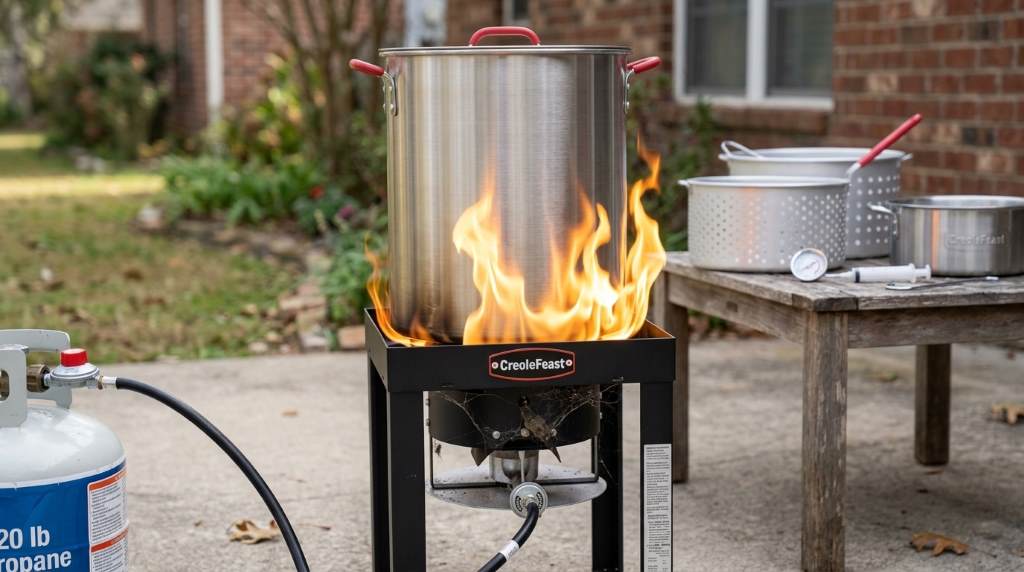
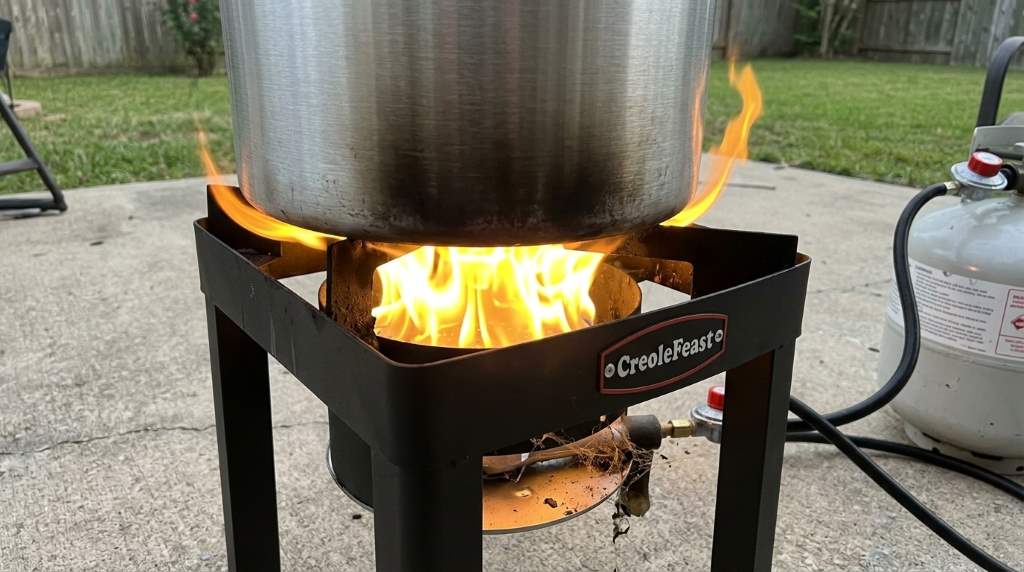
A yellow flame on a CreoleFeast TFS3010 turkey fryer usually means incomplete combustion or restricted airflow. Most often, a dirty burner, blocked air intake, moisture, or regulator problem causes the color change.
That matters because a properly adjusted propane burner should produce a mostly blue flame. Cooking fires also remain a major concern, with cooking causing about half of reported residential fires in recent federal data.
If you recently started using a CreoleFeast TFS3010 turkey fryer, inspect the burner before continuing. A careful cleaning and airflow check often solves the problem without replacing major components.
What a Yellow Flame Means on the TFS3010
Propane needs the correct balance of fuel and oxygen to burn efficiently. When the burner receives too little oxygen, combustion becomes incomplete and the flame can turn yellow or orange.
Therefore, flame color provides a useful warning during a burner inspection. A brief color change during ignition can occur, but persistent yellow flames deserve attention.
The TFS3010 uses an adjustable air control system around its burner assembly. That system helps provide the oxygen needed for a stable blue propane flame.
Common Reasons Your TFS3010 Flame Turns Yellow
1. The Burner Ports Need Cleaning
Grease, soot, dust, and cooking residue can collect around burner openings. Those deposits can disturb gas flow and prevent proper combustion.
Creole Feast specifically recommends clearing clogged burner ports when burner performance suffers. Use a soft wire brush and avoid damaging the burner openings during cleaning.
2. The Air Intake Has a Blockage
The burner needs unrestricted air entering its mixing area. Dirt, insects, spider webs, or debris can interfere with that airflow.
This problem becomes more likely when you store the fryer outdoors. Before every use, inspect the burner and air intake for anything that could restrict oxygen.
3. The Burner Contains Moisture
Water inside the burner can interfere with normal gas and air mixing. Moisture can enter after cleaning, rain exposure, or outdoor storage.
Creole Feast lists water inside the burner as one possible reason for burner problems. Allow the burner to dry completely before lighting the fryer again.
4. The Air Control Setting Needs Attention
The TFS3010 includes adjustable air control to help maintain proper combustion. If the setting restricts airflow too much, the flame may become yellow.
However, do not make random adjustments while the fryer operates. Turn everything off, let the burner cool, then inspect the adjustment according to the owner instructions.
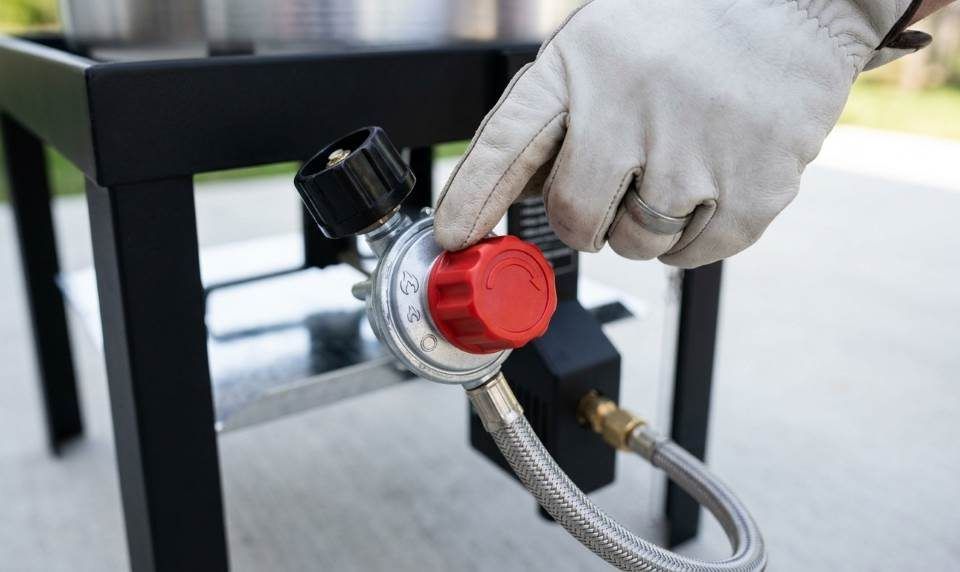
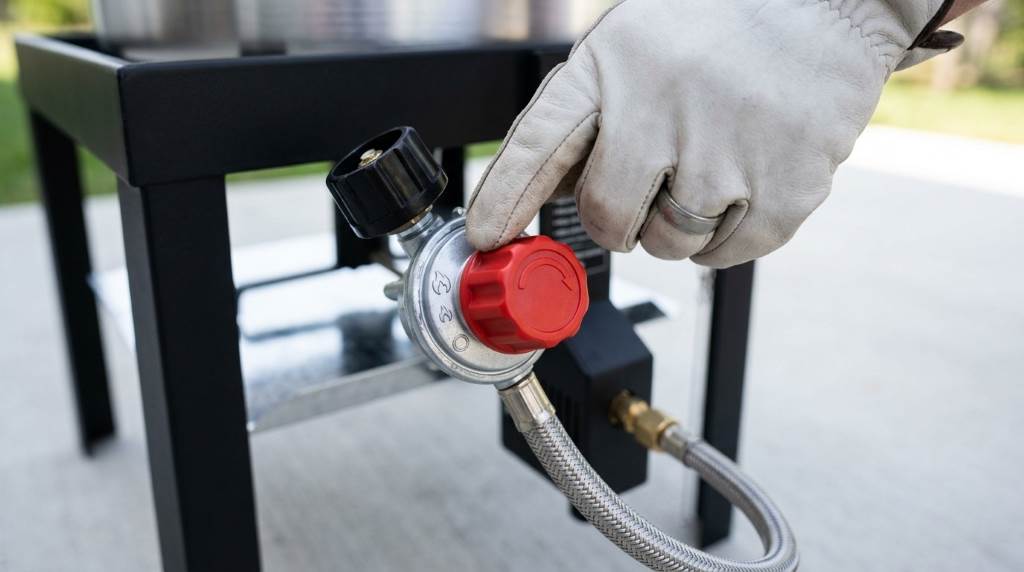
5. The Regulator Is Restricting Gas Flow
A regulator problem can create abnormal burner behavior even when the burner itself looks clean. Low or unstable gas flow can change flame shape, strength, and color.
The regulator also contains a flow limiting device on compatible Type 1 connections. Opening the cylinder valve incorrectly can activate that safety feature and reduce gas flow.
6. The Propane Supply Is Low
A nearly empty propane cylinder can produce inconsistent burner performance. Therefore, check the cylinder before assuming the burner needs replacement.
Creole Feast identifies low propane levels as a cause of weak or extinguished flames. A proper cylinder connection also helps maintain consistent gas delivery.
7. Wind Is Affecting the Burner
Strong wind can disturb the flame and make its appearance difficult to judge. It can also cause the flame to move away from the burner ports.
Move the fryer away from excessive wind while maintaining the required outdoor clearances. Never place the fryer inside a garage, shed, porch, or enclosed area.
How to Fix a Yellow Flame Safely
Start with the simplest inspection before touching the gas system. A structured check helps you identify the actual cause instead of changing several variables at once.
- Turn the burner control completely off.
- Close the propane cylinder valve.
- Allow the burner and fryer to cool completely.
- Inspect the burner ports for dirt or residue.
- Check the air intake for insects and debris.
- Look for moisture inside the burner.
- Inspect the hose and regulator for visible damage.
- Confirm that the propane cylinder contains fuel.
- Reconnect the regulator securely when required.
- Relight the fryer according to the owner instructions.
Never clean or adjust the burner while an open flame remains present. Also, never attempt to repair a damaged gas hose or regulator with improvised materials.
Reset the Regulator When Gas Flow Looks Weak
A flow limiting device can restrict gas delivery when it detects an abnormal flow condition. The Creole Feast troubleshooting guidance provides a specific reset sequence for compatible Type 1 connections.
First, turn the regulator off and close the propane cylinder valve completely. Then wait several seconds before restoring the connection and reopening the cylinder valve.
Afterward, turn the regulator on and relight the appliance according to the manual. This procedure can restore normal gas flow when the limiter has activated.
How to Clean the TFS3010 Burner
Begin only after the burner has cooled and the propane supply remains closed. Remove loose dirt around the burner exterior before examining the ports closely.
Use a soft wire brush to remove buildup from clogged burner openings. Avoid enlarging the openings because their size affects how the burner distributes propane.
Next, inspect the air intake and mixing area for spider webs or insect nests. Outdoor gas appliances commonly attract insects because protected openings provide convenient shelter.
After cleaning, make sure the burner remains completely dry. Reassemble the fryer correctly before conducting a controlled ignition test outdoors.
What the Flame Should Look Like
A healthy propane burner generally produces a predominantly blue flame with a steady and consistent pattern. Small variations can occur because outdoor conditions affect flame behavior.
A persistent yellow, orange, smoky, or unusually tall flame indicates that you should investigate the burner. Black soot around the burner or cookware provides another warning sign of incomplete combustion.
| Flame appearance | Possible concern | Recommended action |
|---|---|---|
| Mostly blue and steady | Normal combustion | Continue normal operation |
| Mostly yellow | Restricted airflow or combustion issue | Stop and inspect the burner |
| Weak blue flame | Low gas flow or regulator issue | Check propane and regulator |
| Large unstable flame | Gas or airflow problem | Shut down and inspect |
| Flame repeatedly goes out | Wind, blockage, moisture, or low propane | Correct the cause before relighting |
When You Should Stop Using the Fryer
Do not continue cooking simply because the fryer still produces heat. A persistent abnormal flame can indicate a gas or combustion problem that requires correction.
Stop immediately if you smell propane, hear unusual hissing, see flames outside the intended burner area, or notice damaged gas components. Turn off the gas supply and move away from the appliance if the gas odor continues.
Creole Feast advises shutting off the gas and extinguishing open flames when you smell gas. The company also recommends contacting the fire department if the odor remains.
Why You Should Never Ignore a Yellow Flame
Incomplete combustion can produce soot and unwanted combustion products. More importantly, abnormal burner behavior can indicate a condition that reduces safe and predictable operation.
Turkey frying already involves high temperatures, propane, and large quantities of hot oil. Historical federal safety reports document numerous turkey fryer incidents involving fires, burns, explosions, and related hazards.
For that reason, flame inspection should become part of your normal fryer setup. Spending several minutes checking the burner can prevent a much more serious problem later.
Prevent Yellow Flames Before They Start
Good maintenance usually prevents recurring burner problems. Store the fryer in a clean, dry location that limits exposure to rain, insects, grease, and airborne debris.
- Clean the burner after heavy cooking sessions.
- Keep burner openings free from grease buildup.
- Protect the appliance from rain during storage.
- Inspect the burner before seasonal use.
- Check the hose and regulator for visible damage.
- Keep the propane connection clean and secure.
- Follow the manufacturer lighting procedure.
- Never modify the burner or gas components.
Additionally, keep the fryer on a hard, level surface away from combustible materials. The TFS3010 instructions specify outdoor operation and minimum clearance requirements around the appliance.
Do Not Confuse Flame Problems With Oil Problems
A yellow burner flame and overheated oil represent different problems. The flame concerns combustion, while oil temperature depends on burner output and cooking conditions.
Therefore, never solve a burner problem by simply increasing the gas control. That approach can worsen an unstable flame and create unnecessary heat around the fryer.
Use the fryer thermometer to monitor cooking temperature instead of judging heat from flame height. A stable burner provides more predictable heat control during cooking.
What If Cleaning Does Not Fix the Yellow Flame?
If cleaning fails to restore a stable blue flame, stop using the fryer until you identify the cause. The problem could involve the regulator, burner alignment, gas connection, or another component.
Do not drill burner openings, replace fittings with unrelated parts, or bypass safety devices. Those changes can alter gas pressure and combustion characteristics.
Instead, consult the TFS3010 owner instructions or contact Creole Feast customer support. Manufacturer guidance remains the safest route when basic cleaning and inspection fail.
Quick TFS3010 Yellow Flame Checklist
Use this checklist whenever the burner suddenly changes color or performance. Work through each item with the propane supply turned off.
- Is the propane cylinder sufficiently full?
- Is the regulator connection tight?
- Did the flow limiter activate?
- Are burner ports clean?
- Is the air intake unobstructed?
- Could insects have entered the burner?
- Is moisture present inside the burner?
- Does the hose show damage?
- Does the flame remain yellow after cleaning?
If the final answer remains yes, do not continue operating the fryer. A persistent abnormal flame deserves professional or manufacturer guidance before further cooking.
Frequently Asked Questions
Is a yellow flame normal on the CreoleFeast TFS3010?
No, a persistent yellow flame usually indicates an airflow, gas flow, burner, or combustion problem.
Can a dirty burner cause a yellow flame?
Yes, clogged burner ports can disrupt propane distribution and contribute to abnormal flame combustion.
Can spider webs affect the TFS3010 burner?
Yes, insect nests and spider webs can obstruct airflow and interfere with normal burner operation.
Should I keep cooking with a yellow flame?
No, shut the fryer down and inspect the burner before using it again.
What if cleaning does not correct the flame?
Stop using the fryer and contact the manufacturer or a qualified gas appliance professional for further diagnosis.
Conclusion
A yellow CreoleFeast TFS3010 flame usually points toward incomplete combustion caused by restricted airflow, burner contamination, moisture, or gas delivery issues. Start with a complete shutdown, then inspect the burner, air intake, propane supply, regulator, and connections.
Most importantly, never ignore a persistent abnormal flame or continue cooking while the burner behaves unpredictably. Clean the burner carefully, follow the manufacturer instructions, and contact qualified support when basic troubleshooting fails.
Before your next cooking session, make burner inspection part of your setup routine. That simple habit helps your TFS3010 deliver steadier heat while keeping propane and hot oil hazards under better control.