How to Control Temp on Creole Feast SBK1001 Seafood Boiler

How to Fix Cosori 9-in-1 TurboBlaze Air Fryer Fan Noise
August 11, 2026
Why Is My CreoleFeast TFS3010 Turkey Fryer Flame Yellow?
August 11, 2026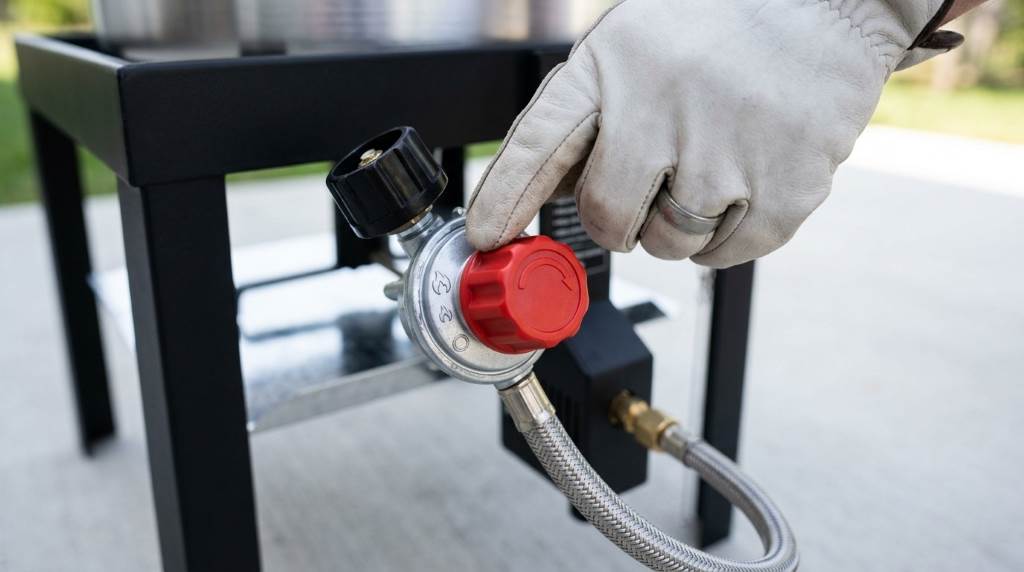
To control temperature on the Creole Feast SBK1001, adjust its propane regulator and watch the burner flame. The Creole Feast SBK1001 seafood boiler uses a 100,000 BTU burner and a 100 quart pot.
Unlike a kitchen appliance, this outdoor boiler does not maintain temperature through a digital thermostat. Instead, you control heat by adjusting propane flow and monitoring the boil. That approach gives you strong control once you learn how the regulator responds.
How Temperature Control Works on the SBK1001
The SBK1001 uses a powerful propane burner beneath the cooking pot. Its regulator controls the gas reaching that burner, which directly affects flame intensity.
Therefore, higher regulator settings produce stronger flames and faster heating. Lower settings reduce the flame and help maintain a gentler cooking level.
The key is not simply turning the regulator to maximum. Instead, match the flame strength to the cooking stage and amount of water.
The Regulator Controls Heat
The regulator serves as your primary heat control during cooking. After lighting the burner, turn the regulator toward the desired heat setting.
Start with stronger heat while heating the water. Then reduce the flame after the water reaches your desired cooking condition.
Make small adjustments rather than constantly turning the control back and forth. This method gives the water time to respond before another adjustment.
The Flame Shows Burner Performance
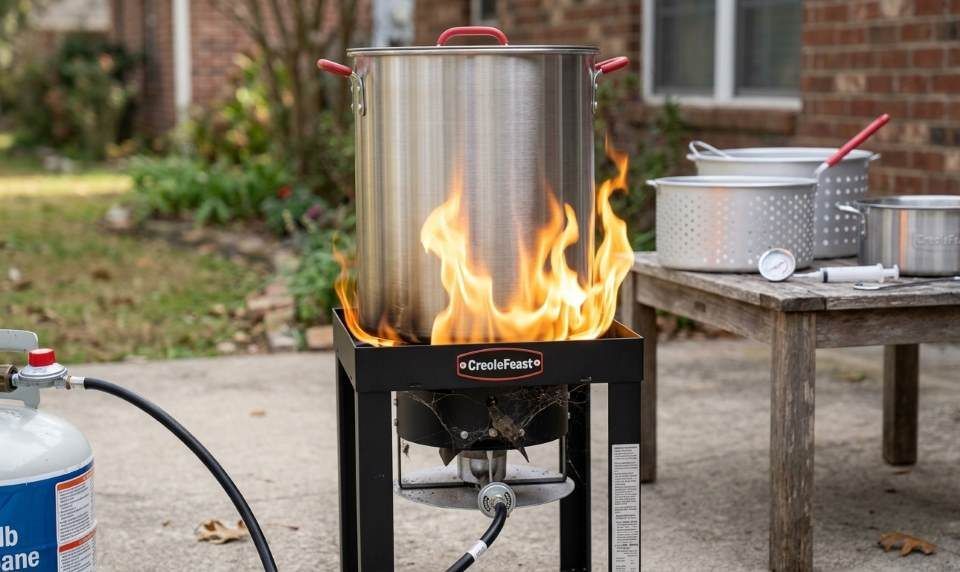
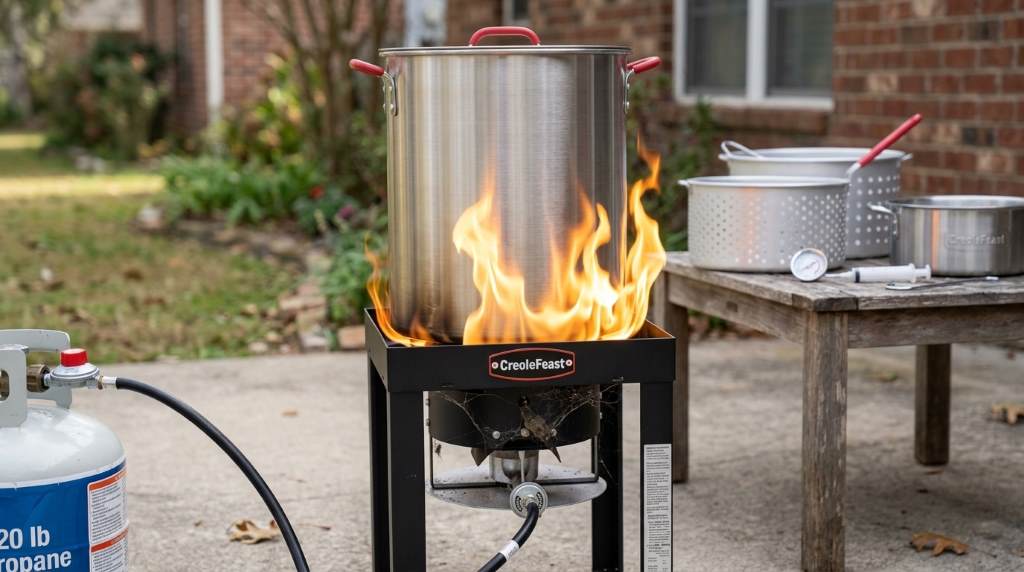
Watch the burner flame whenever you adjust the regulator. The owner manual identifies a predominantly blue flame as the preferred pattern.
A strong yellow flame can indicate inefficient combustion or a burner problem. If the flame pattern looks abnormal, stop relying on temperature adjustments alone.
Instead, inspect the burner and surrounding air passages after the appliance cools. Blockages from insects, webs, dirt, or moisture can affect burner performance.
Step by Step: How to Control the Cooking Temperature
Good temperature control starts before you light the burner. Prepare the pot, water level, propane supply, and cooking ingredients first.
- Place the correct SBK1001 pot securely on its stand.
- Fill the pot between the required minimum and maximum levels.
- Check the hose, regulator, burner, and connections before lighting.
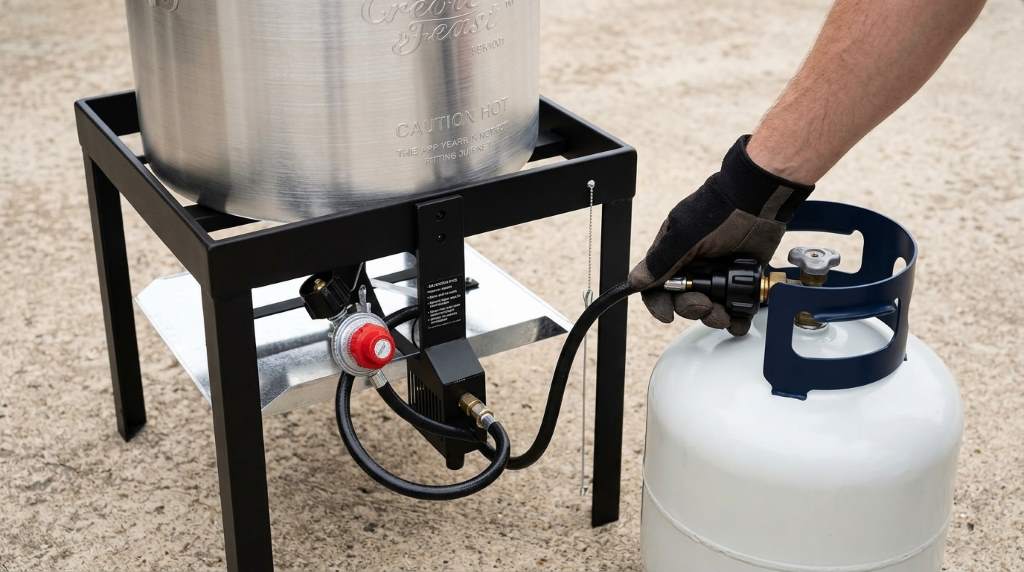
- Open the propane cylinder according to the operating instructions.
- Open the regulator and ignite the burner using the supplied ignition system.
- Begin with a stronger flame while bringing the water toward a boil.
- Reduce the regulator setting once the desired boil develops.
- Watch the water and flame after every heat adjustment.
- Increase heat slightly when adding cold ingredients reduces the boil.
- Lower the flame again after the water recovers.
The SBK1001 manual specifies a two gallon minimum and twelve gallon maximum water level. Staying within those limits supports safer operation and consistent heating.
Use Different Heat Levels for Different Cooking Stages
One heat setting rarely works well from start to finish. Large batches respond differently as ingredients enter the pot.
For that reason, divide the cooking process into three basic stages. Heat aggressively first, stabilize the boil second, and manage recovery last.
Stage One: Heat the Water Quickly
Use a stronger flame when you need to heat a large volume of water. The SBK1001’s high output helps shorten the initial heating period.
However, avoid treating maximum heat as the default cooking setting. Once the water reaches a strong boil, excessive heat can waste propane.
Therefore, reduce the regulator gradually after the water reaches the required cooking condition. Let the water settle before making another adjustment.
Stage Two: Maintain a Steady Boil
A steady boil usually needs less burner power than initial heating. Reduce the flame until the water continues boiling without excessive turbulence.
This approach also gives you better control when cooking delicate seafood. A controlled boil can reduce unnecessary movement and help prevent overcooking.
Keep the lid position consistent when possible because large changes can alter heat retention. Also, avoid frequent lid lifting during active cooking.
Stage Three: Recover Heat After Adding Food
Cold seafood and vegetables can quickly reduce the water temperature. The larger the batch, the more noticeable that temperature drop becomes.
After adding ingredients, increase the burner slightly when necessary. Once the boil returns, reduce the flame again.
This recovery method works better than leaving the burner at maximum for the entire cooking session. It also makes propane use easier to manage.
How Much Water Should You Use?
Water volume strongly affects how quickly the boiler heats and recovers. The SBK1001 has a 100 quart pot, but you should follow its marked fill limits.
| Setting | SBK1001 Guidance | Temperature Control Impact |
|---|---|---|
| Minimum water | 2 gallons | Smaller volume heats faster |
| Maximum water | 12 gallons | Larger volume needs more recovery time |
| Burner output | Up to 100,000 BTU | Provides strong heating capacity |
Never compensate for an excessive water level by simply increasing burner power. The manufacturer specifically instructs users to remain within the marked fill range.
How to Keep Temperature More Consistent
Consistent cooking depends on more than regulator position. Water volume, ingredient temperature, wind, lid use, and burner condition all affect heat.
Keep the Boiler Protected From Strong Wind
Wind can disturb the burner flame and reduce heating consistency. The troubleshooting guidance specifically identifies excessive wind as a possible cause of flame problems.
Place the boiler in a suitable outdoor location with stable conditions. Never block the ventilation needed for proper combustion.
Avoid Overloading the Basket
A heavy ingredient load can reduce water temperature dramatically. It can also make heat recovery slower after you add food.
For large batches, plan ingredient additions carefully. Give the boiler enough time to recover before making another major addition.
Use the Lid Strategically
The lid helps retain heat while the boiler works toward a boil. However, repeated opening releases heat and extends recovery time.
Keep the lid closed during appropriate heating periods. Remove it when the cooking process requires direct observation or ingredient handling.
Watch the Boil Instead of Chasing a Number
The SBK1001 relies on manual flame control rather than automatic temperature regulation. Therefore, visual cooking cues matter during operation.
Watch the strength of the boil, ingredient movement, and recovery after additions. Use a suitable food thermometer when a recipe requires a specific internal temperature.
What to Do When the Boiler Gets Too Hot
If the water boils more aggressively than necessary, reduce the regulator gradually. Avoid making a dramatic adjustment unless the cooking situation requires it.
Wait briefly after each change and observe the water again. The goal involves maintaining the desired cooking activity without unnecessary burner power.
If reducing the flame causes unusual behavior, inspect the burner rather than forcing the regulator. A clean, properly functioning burner should respond predictably.
What to Do When the Boiler Does Not Get Hot Enough
First, check whether the propane cylinder contains enough fuel. Low propane supply can contribute to weak heating or flame loss.
Next, inspect the burner for webs, insects, debris, or moisture. The manufacturer lists blocked burners and water in the burner among possible flame problems.
Also, check for strong wind around the cooking area. If the flame remains weak after basic checks, follow the manufacturer’s troubleshooting procedure.
Reset a Restricted Gas Flow
A regulator flow limiter can sometimes restrict gas flow after a connection problem. The manual provides a specific reset sequence for this situation.
- Turn the regulator off.
- Close the propane cylinder valve completely.
- Wait several seconds for pressure to equalize.
- Reconnect the Type 1 connection if required.
- Open the cylinder valve again.
- Open the regulator and relight the burner.
If the burner still performs poorly, stop troubleshooting through repeated relighting. Contact the manufacturer or a qualified gas professional when necessary.
Safety Rules That Matter During Temperature Control
Temperature adjustments should never override propane safety. The SBK1001 is designed for outdoor use only and requires proper ventilation.
- Never operate the boiler indoors.
- Never leave the appliance unattended while cooking.
- Keep combustible materials away from the burner.
- Inspect the hose before every use.
- Never operate the appliance when you smell propane.
- Keep the propane cylinder upright during operation.
- Never move the boiler while it remains hot or lit.
- Keep the heat shield correctly positioned during use.
- Keep an appropriate fire extinguisher nearby.
The manual also warns that heated liquid can remain dangerously hot after cooking ends. Allow the appliance and liquid to cool before handling or cleaning.
Cleaning Helps Maintain Stable Burner Performance
Temperature control becomes difficult when the burner cannot receive proper airflow. Therefore, regular cleaning supports both performance and safer combustion.
After the appliance cools, inspect the burner tube for webs, insect nests, mud, and other obstructions. The manufacturer recommends using an appropriate flexible brush or wire for clearing blockages.
Clean the pot after every cooking session, especially after using salty boiling water. Salt can contribute to corrosion and pitting when residue remains on aluminum surfaces.
A Simple Temperature Control Routine
For repeatable results, use the same basic routine every time you cook. Consistency makes it easier to understand how your particular setup responds.
| Cooking Moment | Recommended Approach |
|---|---|
| Before ignition | Inspect equipment and confirm correct water level |
| Initial heating | Use stronger burner output |
| Boil reached | Reduce flame gradually |
| Food added | Increase heat briefly for recovery |
| Boil restored | Lower flame to maintain cooking |
| Cooking finished | Turn off propane safely |
This routine prevents the most common temperature mistake: using maximum burner power throughout the entire cook. Instead, treat heat as a control variable that changes with cooking conditions.
Common Temperature Control Mistakes
Many temperature problems come from incorrect operation rather than inadequate burner power. Fortunately, most mistakes have simple fixes.
- Using maximum heat continuously instead of adjusting after boiling.
- Opening the lid repeatedly while trying to maintain heat.
- Adding too many cold ingredients simultaneously.
- Ignoring wind around the burner.
- Failing to inspect the burner before cooking.
- Trying to compensate for a blocked burner with more gas.
- Using the wrong regulator or hose assembly.
- Operating outside the recommended water level.
Correct these issues before making more aggressive temperature adjustments. A properly functioning setup should respond predictably to regulator changes.
When You Should Stop Using the Boiler
Stop operation immediately if you smell gas or discover a propane leak. Do not attempt to solve a gas leak by continuing to adjust the regulator.
Likewise, stop using the appliance when the hose shows cuts, severe abrasion, or other damage. Replace damaged gas components with manufacturer specified parts.
If the flame remains abnormal after cleaning and basic checks, seek qualified assistance. Reliable temperature control starts with safe and properly functioning equipment.
Final Takeaway
Controlling the Creole Feast SBK1001 temperature mainly requires careful regulator adjustment and flame observation. Start with stronger heat, reduce it after boiling, and increase it briefly when cold ingredients lower the boil.
For the best results, maintain the correct water level and keep the burner clean. Always follow the manufacturer’s safety instructions and never sacrifice safe operation for faster cooking.
Before your next seafood boil, inspect the burner, confirm the water level, and test the flame. Then use small regulator adjustments to maintain a steady cooking boil throughout the session.
Frequently Asked Questions
Does the SBK1001 have a temperature thermostat?
No, the SBK1001 uses a manual propane regulator to control burner heat rather than an automatic thermostat.
How do I lower the temperature on the SBK1001?
Turn the regulator toward a lower heat setting and wait for the boil to settle before adjusting again.
Why does my SBK1001 lose heat after adding seafood?
Cold ingredients absorb heat, so temporarily increasing burner output can help restore the boil.
Why is my SBK1001 flame weak?
Check propane supply, wind, burner obstructions, moisture, and the regulator connection before continuing operation.
What flame should the SBK1001 produce?
A predominantly blue flame with little yellow indicates the preferred burner flame pattern.