Why Is My Comfee Portable Mini Dishwasher Leaking?

How to Clean a Clogged Breetee Portable Range Hood Filter
August 11, 2026
How to Fix Cosori 9-in-1 TurboBlaze Air Fryer Fan Noise
August 11, 2026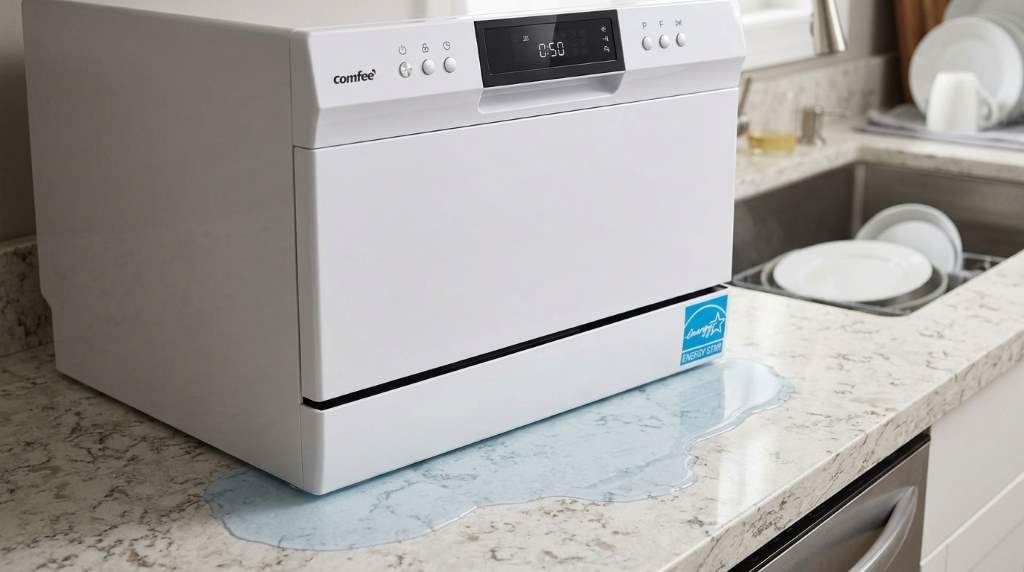
Your Comfee portable mini dishwasher usually leaks because of a loose hose, damaged seal, blocked drain, or overfilling. First, stop the cycle, unplug the machine, and locate the exact leak point before using it again.
A Comfee portable mini dishwasher can save counter space while handling everyday dishes efficiently. Some models use a compact five liter water tank and support two place settings. Because these machines use several gallons of water during operation, even a small seal problem deserves attention.
Common Reasons Your Comfee Dishwasher Leaks
Most leaks come from a small number of mechanical or installation problems. Therefore, checking each area systematically can save time and prevent unnecessary repairs.
- Loose or damaged water supply connections
- Drain hose problems or poor hose positioning
- Door gasket damage or food debris
- Blocked filters or drainage passages
- Excess detergent or incorrect detergent
- Overloading that interferes with the door seal
- Excessive water entering the dishwasher
- Internal pump, valve, or seal failure
The location of the water often reveals the cause. Water near the front usually points toward the door, while water underneath suggests an internal issue.
Start With a Safe Leak Check
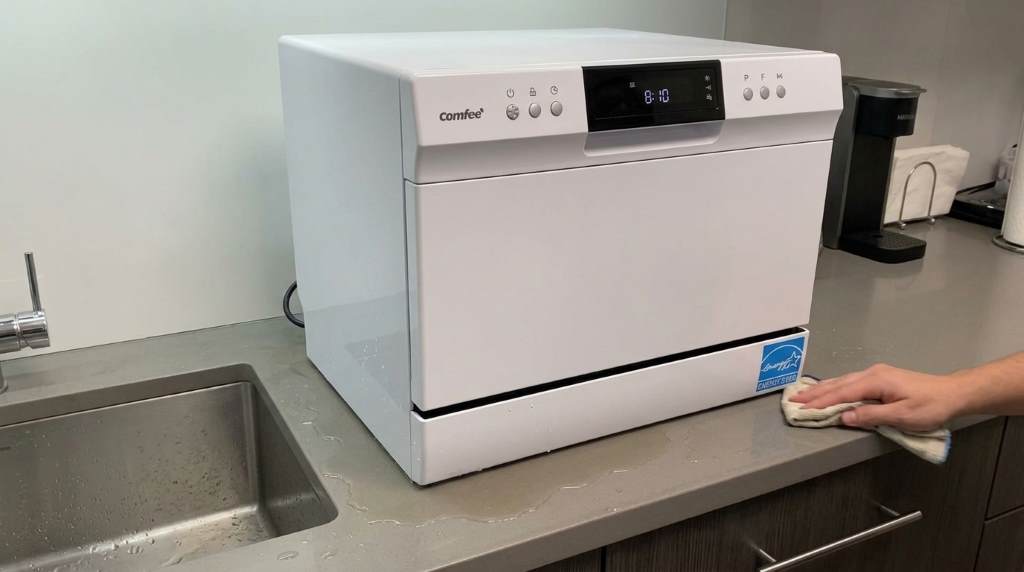
Before troubleshooting, turn off the dishwasher and disconnect its electrical power. If the machine connects directly to a faucet, shut off the water supply as well.
Next, dry the countertop and surrounding area completely. Then run a short cycle while watching the machine carefully from a safe distance.
Do not reach underneath an operating dishwasher or touch wet electrical connections. Instead, stop the cycle immediately if water reaches the power cord or electrical outlet.
Find the Exact Leak Location
Place a dry paper towel around the dishwasher’s base and hose connections. The first wet area can help identify where the water originates.
Check the front, rear, sides, and underneath the machine separately. Also inspect the faucet connection if your model uses a direct water hookup.
Check the Water Supply Hose
A loose inlet connection can create a surprisingly large leak during filling. Inspect both ends of the water supply hose for moisture, cracks, or damaged threads.
Turn off the faucet before tightening any connection. Then reconnect the fitting firmly without forcing or cross threading the connection.
If the fitting still leaks, inspect its washer or sealing surface. A damaged washer can prevent a tight seal even when the connection feels secure.
Inspect the Faucet Adapter
Faucet adapters can leak when they do not match the faucet threads correctly. Remove the adapter and inspect both threaded surfaces for damage.
Also check whether the faucet aerator needs removal before installing the adapter. A poor fit can cause water to escape around the connection during operation.
Never force an incompatible adapter onto the faucet. Instead, use the correct fitting recommended for your specific dishwasher model.
Inspect the Drain Hose
The drain hose carries wastewater away from the dishwasher during and after each cycle. A loose clamp, crack, kink, or damaged connection can cause water to escape.
Follow the entire hose from the dishwasher to its discharge point. Look for sharp bends, crushed sections, loose fittings, and visible splits.
If the hose enters a sink or bucket, make sure its end stays securely positioned. A moving hose can spray wastewater across the counter or floor.
Fix a Loose Drain Connection
Turn off the dishwasher before touching the drain connection. Then inspect the clamp and tighten it carefully if the connection feels loose.
Do not overtighten plastic fittings because excessive pressure can damage the connection. Replace a cracked hose rather than attempting a temporary patch.
Examine the Door Gasket
A damaged door gasket ranks among the most common causes of front leaks. The gasket creates a seal between the dishwasher door and the washing compartment.
Open the door and inspect the entire gasket for cuts, distortion, hardened sections, or trapped food particles. Even a small obstruction can create a path for water.
Clean the gasket gently with a damp cloth and mild dish soap. Then dry the sealing surface before testing another cycle.
Check for Door Obstructions
Dish placement can affect the door seal more than many owners expect. A tall plate, utensil, or container can press against the door.
Remove anything that prevents the door from closing naturally. Then close the door and confirm that it sits evenly around the frame.
If the door requires unusual force, stop using the dishwasher until you identify the obstruction. A forced door can worsen gasket damage over time.
Look for an Overfilled Dishwasher
Too much water can escape through areas that normally remain completely dry. An overfill condition may result from a sensor, valve, or internal plumbing problem.
Some Comfee models use leak detection and display an error when water reaches the base area. Never bypass or remove the float mechanism to keep the machine running.
The float helps detect abnormal water levels and can protect the appliance from continued flooding. If the machine repeatedly overfills, professional service may provide the safest solution.
Clean the Filter and Drain Area
Food particles can collect around the filter and restrict normal drainage. Poor drainage can leave excessive water inside the dishwasher after a cycle.
Remove the filter according to your model’s instructions. Rinse it thoroughly and remove visible debris from the surrounding drain area.
After cleaning, reinstall every component correctly. A poorly seated filter can create drainage problems and may affect the dishwasher’s internal water flow.
Watch for Standing Water
Small amounts of residual water can occur after normal operation. However, a large pool that remains after draining deserves further investigation.
Check whether the drain hose contains a blockage or sharp bend. If the hose looks clear, the drain pump may require professional inspection.
Use the Correct Dishwasher Detergent
Excess suds can push water through seals that normally contain wash water. This problem often appears after someone uses regular dish soap inside the dishwasher.
Only use detergent intended for automatic dishwashers. Follow the recommended amount instead of assuming more detergent provides better cleaning.
If excessive foam caused the leak, stop the machine and allow the suds to settle. Then remove the remaining water according to your model’s instructions.
Check How You Load the Dishwasher
Improper loading can redirect spray toward the door instead of the intended washing surfaces. Therefore, loading technique can directly influence leakage.
- Keep tall items away from the door.
- Prevent dishes from blocking the spray arm.
- Avoid stacking items tightly together.
- Keep sharp objects away from the door seal.
- Make sure the racks sit correctly before starting.
After loading, spin the spray arm gently by hand if your model allows access. It should move freely without striking dishes or utensils.
Check the Dishwasher’s Position
A countertop dishwasher needs a stable, level position for reliable operation. An uneven surface can affect water movement and door sealing.
Place the dishwasher on a strong, level countertop near the required water and drainage connections. Keep the appliance stable when opening or closing the door.
Do not place the machine on an unstable cart or surface unless the manufacturer specifically supports that setup. Movement can stress hoses and connections during operation.
What Different Leak Locations Can Tell You
| Leak Location | Likely Cause | First Check |
|---|---|---|
| Front of door | Gasket or loading problem | Inspect gasket and door clearance |
| Water inlet area | Loose connection or washer | Check faucet adapter and hose |
| Rear of machine | Drain hose issue | Inspect hose and clamp |
| Underneath machine | Internal leak | Stop use and inspect professionally |
| Water after draining | Drain restriction | Clean filter and check hose |
When an Internal Part May Have Failed
Sometimes external troubleshooting cannot solve a dishwasher leak. Internal hoses, pumps, valves, seals, and other components can eventually develop faults.
Repeated leakage from underneath the appliance strongly suggests an internal problem. Continued operation can expose electrical components to water and increase the risk of damage.
At that point, stop using the dishwasher and arrange qualified service. Avoid opening sealed internal components unless you have the required appliance repair experience.
Watch for Error Codes
Some Comfee countertop dishwasher models use error codes to identify abnormal operating conditions. A leak detection code can indicate water has reached the machine’s base area.
Record the displayed code before switching the appliance off. This information can help a technician identify the problem more quickly.
Never remove a safety sensor simply because it prevents the dishwasher from operating. That sensor exists to detect conditions that could cause further water damage.
How to Prevent Future Leaks
Regular maintenance can prevent many leaks before they become serious. A few minutes of inspection can also extend the useful life of the dishwasher.
- Inspect hoses regularly for cracks and stiffness.
- Clean the filter frequently.
- Keep the door gasket free from debris.
- Use only automatic dishwasher detergent.
- Avoid overloading the racks.
- Check connections after moving the appliance.
- Keep the dishwasher level and stable.
- Inspect the countertop for water after each unusual cycle.
Furthermore, inspect the appliance whenever you move it to another location. Moving can loosen fittings that previously remained secure.
A Simple Five Minute Leak Troubleshooting Routine
When you notice water, follow a fixed troubleshooting order instead of randomly tightening components. This approach helps you identify the source without creating additional problems.
- Stop the dishwasher and disconnect electrical power.
- Shut off the water supply if connected to a faucet.
- Dry the countertop and surrounding area.
- Inspect the door gasket and door clearance.
- Check the inlet hose and faucet adapter.
- Inspect the drain hose and clamp.
- Clean the filter and drain area.
- Check for standing water underneath the appliance.
- Run a short test cycle only after fixing obvious issues.
- Contact qualified service if the leak returns.
This sequence separates simple installation problems from problems that require technical attention. More importantly, it prevents repeated operation while water continues entering the base.
When Should You Stop Troubleshooting?
Stop troubleshooting when water appears underneath the dishwasher after you correct external connections. You should also stop when the machine repeatedly reports a leak condition.
Likewise, stop using the appliance if water approaches electrical components or the power connection. Safety matters more than completing another wash cycle.
If the dishwasher remains under its applicable manufacturer coverage, contact the manufacturer before attempting internal repairs. Unauthorized disassembly can complicate service and may create additional damage.
Frequently Asked Questions
Why is my Comfee dishwasher leaking from the door?
A dirty gasket, damaged seal, overloaded rack, or blocked door can cause water to escape from the front.
Why does my Comfee dishwasher leak underneath?
A leak underneath often indicates an internal hose, pump, valve, seal, or overflow problem.
Can too much detergent make a Comfee dishwasher leak?
Yes, excessive suds can push water through the door seal and cause visible leakage.
Why does my Comfee dishwasher show a leak error?
A leak error can indicate water has entered the base area because of an overflow or internal leak.
Should I keep using a leaking Comfee dishwasher?
No, stop using it until you identify and correct the leak or obtain professional service.
Conclusion
A leaking Comfee portable mini dishwasher usually has a practical cause that you can identify through systematic inspection. Start with the door gasket, water connections, drain hose, filter, detergent, and loading pattern.
However, water underneath the machine or repeated leak detection requires greater caution. Stop operation, protect the surrounding area, and arrange qualified service when external checks cannot solve the problem.
Take a few minutes to locate the leak before running another cycle. Acting early can prevent countertop damage, electrical problems, and a much more expensive dishwasher repair.